{Of all lies, art is the least untrue - Flaubert}


Sunday, December 03, 2006

Vera Drake


The tagline of the film says - Wife. Mother. Criminal. , but for sure Mike Leigh is not interested in trifurcating Vera Drake into these boundaries or joining these three into one character. Its the humanity of Vera and the film that touches us. Here is a simple story of a old woman who helps young woman out, alongside being a mother, wife and a daughter.

The film is clearly divided into two parts - the one where Vera do what she thinks right, and the other where law do what it deems lawful. The debate whether she is right, or law lawful are skipped, there is no statements of sorts. The moral fulcrum of the film lies in the eyes of Vera, played with amazing beauty by Imelda Staunton. In one of most absorbing performances, Imelda Staunton plays Vera with so much common-ness that her quagmire mirror the times she live in, and also to some extent touches the ideas of social acceptance of personal morality. When asked by a detective whether she performs abortions, she says that she don't understand what he is saying, she says she just helps out wretched girls in trouble. No doubt, she is part of some bigger game, which caters the upper class and she is being used, but Vera assistance to girls and women who need some help, is purely personal. Like other such films (Talk to Her, Dancer in the Dark), Vera looses the battle with law.

Towards the second half, the film veers into full fledged melodrama, like the complete turn in Vera's life. Although Vera understands her fate, but she is more worried about her family, and Leigh paints this film about humanity with master strokes, with the help of an excellent cast. The leading among them is Imelda Staunton, whose one look, when the detective come to arrest her during the Christmas party, is more than devastating in a split-second, to say the least. That one look provides such complex feeling of care for the family and acknowledgement of the danger on the doorsteps, danger that will not only engulf her and her respect but her family also. Others in cast are also excellent, especially the odd couple Ethel (Vera's mousy daughter who works in a Bulb testing factory, played by Alex Kelly) and Reg (a lonely neighbor, whom Vera invites at home, played by Eddie Marsan). Reg provides the emotional high point of the film when he thanks Vera for the Christmas party and declares it "Smashing", its seems to be the sincerest form of gratitude to Vera (and at the time Vera needed it most). He, later in the film, even defends Vera for her stand in his simple statement, 'It's all right for the rich if you've got six kids, but if you can't feed them, you can't love them.' Mike Leigh is master in making such credulous characters without even a hint of caricature or stereotyping.


At one point, I thought that Leigh has set up stage for first gaining sympathy for all-good Vera, innocent mother helping all others and then using this sympathy to bring forth emotions as Vera is convicted. But I think there is something wrong in this logic. Her decision to do abortions may be because of several reasons (at one point when the detective asks her whether she was raped when young, she starts weeping) and Vera's goodness is not to cover that up, never in the film, her goodness tries to cry out of a scene. I am not too sure about this, one line of thought may be that she could be made not so good (having some rough edges) and then the response to her actions may be more equivocal than for the all-good Vera, but having said this, Vera's character comes out so real and believable, every detail of her character smells of stoic compassion, that I would not like to doubt director's intentions.

This film is not without a moral center, it is not neutral or just observational, but the film is more interested in the nature of family, humanity and morality. Vera Drake is a film about an issue, without either being condescending, preachy or falsely pretentious but more importantly, its a story about a good person and her world (society), and what it takes to be so. Vera Drake lets us believe that such people exists.

Thursday, November 30, 2006

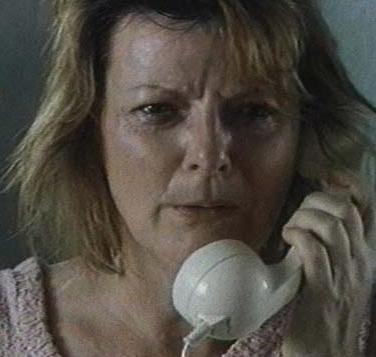
Secrets and Lies : Brenda Blethyn as Cynthia Rose Purley


She sometimes blurs the line between a fool and a clown, both of tragic melodramatic shades. In a long shot (about 6 mins or so) of her first meeting with her daughter, Brenda Blethyn's Cynthia Rose Purley acts and laughs and cries and mutters sweetheart (with 'H' silent) all the times. A viewer is left puzzled on what to believe and what to dismiss, much like Hortense (Marianne Jean-Baptiste), her lost daughter. But inspite of all this, we are made aware that she is acting like everyone in distress acts, not to cheat but to protect herself, and in all this mess her humanity surfaces, behind the surface of Secrets and Lies. Blethyn acts as a pivot to Mike Leigh's film not like a central character but a character who is lost amongst others. In the birthday party sequence, we can see the discomfort on her face, the uneasiness to accept a multi-bedroon apartment, which she tries to fill in by uttering inanities like the one who try to fit in between some indifferent people. Rejected and ignored by all, the mother in her is still alive and kicking, but so are the secrets, and so are the prejudices.

At one point in the film, Cynthia says "You gotta laugh, ain't ya sweetheart? Else you'd cry", and Brenda Blethyn, while acting, takes it as a rule to be Cynthia. Brenda Blethyn lets her raw and bare kitchen-sink-slice-of-life act remain so, even in her catharsis scene she remains same Cynthia speaking innumerable 'sweethearts' and 'darlings', does not give a sign of character volte-face. No close-ups for her, no staged dialogues, she is our own sitcom heroine, injured and failed like a dysfunctional family. Although I liked the film (compare the brutal nihilism of Naked to the uneasy tenderness of this film) with some reservations (I found few scenes towards the end out of tune), but Brenda Blethyn's performance is invaluable and becomes almost priceless on the second viewing.

Friday, November 24, 2006

Boredom and Unhappiness


Rajeev posts some quotes by French author Céline. I was reminded of early last year when Alok sent me some of those. The one that I liked the most was:

“Living, just by itself - what a dirge that is! Life is a classroom and Boredom’s the usher, there all the time to spy on you; whatever happens, you’ve got to look as if you were awfully busy all the time doing something that’s terribly exciting - or he’ll come along and nibble your brain.”

...Awfully busy in doing something terribly exciting.... I usually find myself doing that, at least pretending. Going to Nature camps, Salsa classes or 10k runs for no purpose but to fill in time with some physical exercise. I fear boredom will nibble me anytime. No amount of reading or movie watching or talking to friends or smoking make me wiser than boredom. Yes, there are rare moments of bliss, when I fearlessly sit alone and even boredom deserts me.

The second one which I found very insightful is:

“Never believe straight off in a man’s unhappiness. Ask him if he can still sleep. If the answer’s ‘yes’, all’s well. That is enough.”

I don't like when people say they are unhappy (Although I have done it several time, but I don't use the term 'Unhappy', I find too strong or may be I fear it). I have become very skeptical of other people's unhappiness. Is it lack of comfort or lack of perfection in their bourgeoisie picture of life or just glitch of irritation or boredom. I believe that if a person is living, he/she is at least marginally happy. Living has some inherent gratification in itself. If you don't look for bigger meaning and bigger pictures, I believe that life is not inherently unhappy or unpardonably painful. There are unhappy lives, we must acknowledge that but pure unhappiness is as rare to find as pure happiness.

Wednesday, November 15, 2006

Small Notes on Two Films


Don

Don can be described as a roadside tea served in a high-end cool-interior coffee shop. The tea looses its open-air taste, and it costs more. Or it can be described as a tea-stall mass number remixed for Buddha Bar. Or see it as a thinking item girl, who can neither dance nor think well. There can be several such analogies but the point is this film has no charm of material it imitates or rediscover or re-interprets, and it is not saying that it does not have its own charm, which it has, although only at a few places. One more thing which came across my mind is lack of character artists in Hindi films today. We don't have anyone like Mac Mohan (working) today, so that part of Mac goes to an unknown and becomes nothing. I seriously think that small parts should be given to known faces, audience have such a little time and volatile memory to accommodate a newcomer. They could have casted a newcomer in the place of Boman Irani, who was really funny when he should be damn evil. Look at the old Don and we have all the smaller parts to known faces. Also, one more thing which I might not be able to express clearly about the films of DON era. I saw them as a child and while seeing them I used to do little calculations about the good and the bad and try to pick up hints who is the real bad guy, the way camera zooms to some of the characters to give as hints and at times those hints are false (You get all the such tricks when you see bunch of them). So eventually you have the whole kit (at least you feel so), and try to make your own guesses, not only about the evil guy but about plot twists and turns, and when director (or screen writer) beats you in that kids play, you feel strangely satisfied, and add that extra twist in your rules book so that you can apply it for the next film. The new DON turns the old to be either too intelligent or too dumb and the fun of the game is lost. Also remakes of such types, broadly they can be done in two extreme ways. One way is like offering tribute to your favorite deity, write him/her love letters and take it all seriously. The second way is a meta-movie, which is a parody of the old film. I think neither of the two will work. The first one is too religious and the second one is too blasphemous, too intelligent. Farhar Akhtar tried something in between (more towards the former approach), and now we know that too doesn't work.


Jaan-e-mann

Jaan-e-mann is one of the few Hindi films that I saw this year and came out satisfied, and even hopeful. If we see the whole film, there are several moments where it falls in the trap of conventions and cliches (especially in second half with the kid), but this film works as the revival of Bollywood musical, how music and narrative can be mixed with colorful imagination. Overall the film is not path breaking and all, but its quite conceptual in its musically over-the-top grand style. Here also, things are painted and clothes are designer, but they have an intentionally made-up feel with no intend to be real, which has its charm. Also the plot is so thin that we don't care about it, everybody knows what will happen and who will get the girl in the love triangle and cliches are there in place, but here shallowness has self-awareness. This romance is a costume drama, visual gimmick, a Broadway musical and homage to Bollywood. Here is a film where we sit to see the next song, the film moves from song to song, sometimes filling up for dialogues, sometimes for whole situations. There is a song, Kabool kar le, which is there to energize the routine situation, is filmed imaginatively and also works as the parody of all shaadi movies. Salman Khan is as self-aware and self-referential as the film, and he perfectly fits the bill, and so are Akshay Kumar and Priety Zinta. Even in this unreal and bizarre colored setting, somehow we feel the characters are not card board, this is I think, a big achievement. This film is interesting because it shows how cinematic medium can be used to elevate (if it sounds pompous read 'perk up' instead) the usual stuff without taking itself too seriously, most of the times. I sometime feel that life would have seen much more interesting if it had BGM, such movies strengthen that silly belief, as least for the time when you are in theatre.


Note:
1) Who-so-ever comments on this post, please write their favorite childhood movie. To start, mine is Mr. India. I have watched Mr. India more than 20 times and still have appetite for it.
2) Even if you feel its too difficult to answer the first question, feel free to comment. My blog can not afford to loose a comment ;)

Friday, November 10, 2006

Melodrama


Nothing can cure my melodrama
There is no convalescence
My emotions, inane,
unbearable, without essence

Behind my walls, I must silently weep
I must smolder to avoid burning
Behind my back someone should stand
Support me without ever turning

Hope might forsake me, but not a tear
I must cry out what I can not bear
I may be happy if I don't care
For this, I should not look here or there

For this, I should stand tall and not see
Exactly like a wisdom tree
Dry eyes wide open, without a wink
They are allowed only to think

Again I go to bouts of fear
Again the sad music starts far and near
Though I think, my heart and soul are clear
I don't know what comes out as tear

I must believe in the goodness of soul
I must see life as a whole
I must understand my life's goal
For God's sake, I must exert some control

I doubt this can ever be done
I even doubt the moon, and the sun
It may be done at the point of gun
Knock me down, let me be the one

Nothing can cure my melodrama
No morning, no light, no season in sight
In the curl of a sea, in my bed, towards right
I weep alone in my own delight

The sublime fruits of knowledge hang high,
Some are sour and some are sweet
Lying down in perversity of soul and circumstance
I need some salt, so I weep

Thursday, November 09, 2006

Kafka's World: Gretes and Gregors


Grete, sister of Gregor Samsa, in Kafka's Metamorphosis, is an interesting character and this story is not only the story of Gregor's physical transformation, but also about Grete transformation, her growing up, her loss of innocence, her moving from love for his brother to protective attitude to logic of indifference. Its also her rise from a younger sister to a breadwinner of the family. Its her story of growing up and playing violin for young men and stretching her limbs in the afternoon sun. For Gregor, the story ends in the dark room, for Grete, it swings afresh in sunny breeze.

After Gregor's grotesque metamorphosis, Grete was the only one who looked little composed. She tried to help him, while her mother was afraid and her father was angry. She gave Gregor food, and later left-over food. A few days later this attitude grew protective and it cut off Gregor from other people. At one level, it looks like she want to stop the embarrassment of Gregor and his parents, to cover up the family-shame. Or is it pride of smugness that she only understands him, which undermines the cognizance of others and puts Grete in a special higher ground, may be some sort of self-appointed slave owner, who takes pride in the responsibility and safeguards her right for it. In the short story, Grete even becomes angry if some body else takes care of Gregor, she makes Gregor her own property and as any private property, she owns him and leaves him when it does not satisfy her needs, under the blanket of possessiveness. Grete's help eventually cuts Gregor of any help. She becomes her savior and like god leaves her one day, but unlike the god's world, there is always hope that everyone will fall one day (although, the next minute, this hope is thrashed with the rise of someone else) . And Kafka doesn't give her any benefit of guilt. Perhaps the most heart breaking point in the short story is to watch the way characters move from compassion to logic, pity to indifference, when they realize logical facts like 'a rotten limb should be removed to save the body', or 'worth of a person is its potential use' or 'we all need to survive somehow', or that nasty million dollar truth 'Life's like that', which can dumb any disturbing thought.

But the point that Kafka intelligently eludes is Grete's fate. Is it same as Gregor's ? or is it not ? In the center of a family politics and Kafka's ruthless diagnosis of the family illness, Grete stands as a 'current' lead and a 'potential' backstage extra. I think Grete is a victim-in-making too, but as any such victim she doesn't realize it, but enjoys her metamorphosis. Also it is not necessary to realize it, it might make life still more difficult to endure. Grete Samsa will get married or will continue to work or might turn into a lady bug tomorrow but how does it effect her today, what's the 'use' of Kafka's creation if it can't help any of the Gregors and the Gretes to escape from their fates. Why should we even read it. These are some questions that come to my mind. I have no answers. Why should I read Kafka and go to enlightened depression, may be because if I ever see a Gregor or a Grete, I will understand them or I will know that life machine runs for petty purposes, and my life is no exception and I, being so rational and benevolent in my eyes, had been torturous for years, to the knowns and the unknowns. Shall I do penance after I read Kafka or shall I change myself or shall I accept the my fate and of others too. One way to look at any art is a tussle between oppressor and the oppressed and an artist always uncovering the ways used my oppressor to oppress, but in Kafka's world both oppressor and oppressed are the same, at the same time, in the same space, living in some mutually acceptable sadomasochist harmony, a mix that let us survive. Does it tell me more about human nature or the world I live in or myself ? I think so.

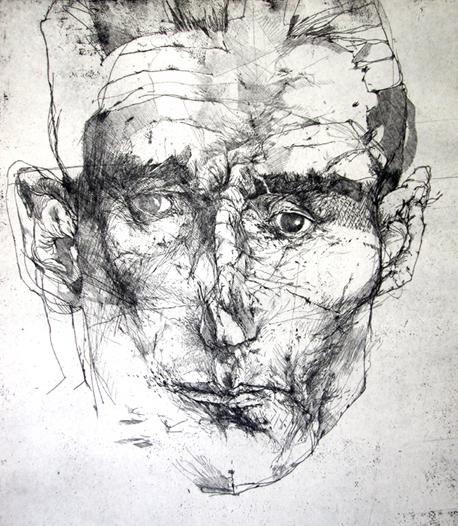
Kafka's sketch taken from here.

Tuesday, October 31, 2006

Back from Home...

I visited my hometown this Diwali, technically I did not visit on Diwali because I spent Diwali in train but it was by and large a Diwali holiday. So this is a mandatory post, my hometown's little blue diary. Almost nothing changes there in a big way but with different events in place, it takes different flavors, like any other small town. This was the election (for Chairman and Ward president) time, which is mixed with Diwali, Eid and a few murders, in short the atmosphere was delightful, full of rumors and heated. At every Gali corner, there were small crowds which discussed the prospects of winning and losing, the weak and the strong grounds, logical voting equations based on caste, power and religion, and of course money, which transcends all evils. There were women discussing the women candidates on the basis of their husband's image, might and power. This is a fun time for children, this vacation they fired crackers and collected pamphlets and party paraphernalia, apart from watching Malaysia in Don (or Don in Malaysia). The old people cursed congress/BJP leaders and doctors/lawyers in the same sentence, they only talked with pride of the relatives who left them for bigger cities or for better countries, in short, those who are well settled, according to them. The atmosphere is filled with songs of two kinds, the religious and the patriotic, both kinds sung by Lata Mangeshkar. This is as high as my hometown can get.

I came back to Delhi on 26th Oct and got to know that the elections were by and large peaceful with couple of murders and few clashes. Also I took the DVD of Children of Heaven with me, most of my relatives loved it. I like that film too but as usual I became a little suspicious of the film when it was unanimously appreciated. I did a promise to my cousin to write about him on the blog. Here it goes: He is 8 years old. While talking about Rang De Basanti with him, I asked him what would have happened if the heroes were not killed towards the end, he replied "phir to film kabhi khatam nahin hoti, teen ghante se jyada koi film nahin hoti". Kill them to end the movie, a closure is required at any cost. It was such a plain verdict. He did even better to describe the cast, "Aamir Khan, Saif Ali Khan ki behan, aur ek foreigner ladki" !

Apart from this, there are few things that are on the discussion list to avoid the void of 'Aur batiyiye...'. One was Munnabhai and the other was Afzal's hanging, to balance the comic and tragic scales of conversations. I did a secret poll (secret because no one knew it was a poll) and got some astonishingly predictable results. Everyone liked Munnabhai (much better than Rang De Basanti) and everyone wanted Afzal to be hanged asap, some even wanted to execute all of the suspects and even the whole community. Almost all of them are quite sure about their decisions and gave examples from history to support it. As it is evident, there is little coherence between their two decisions, Gandhigiri and Hanging (Actually, one of the person added a twist in the tale by saying that Gandhi supported hanging of Bhagat Singh, he liked Munnabhai for its entertainment value and I think he was advocating hanging for the same purpose too, although big words like terrorism and patriotism sounds better). I don't like to insult my folks but they are much like rest of the world.

Adding few links. Read Arundhati Roy's take on Afzal's Hanging (Its a long one, I haven't read it fully yet) and Bhagat Singh's take on Love.

Friday, October 13, 2006

Isabelle Huppert


In an essay by English author Julian Barnes on Claude Chabrol's 1991 film Madame Bovary, he talks this about Isabelle Huppert.


Where other actresses give us a sort of pouty boredom that yet seek to flirt with the audience, Huppert offers severity, anger and an irritaion raised to the condition of nausea. She gives Emma a lucid awareness of her own condition: "She is a victim who does not behave like a victim." Huppert has a capacity to empty her face of expression in a way that both alarms and seduces; like Charles, we blunderingly want to make things right for her. And this harshness and frustuation are in place most of the way: She has the control and seeming lack of vanity to hold back her moments of full beauty to match those rare times (With Rodolphe and Leon, never with Charles) when the catching of happiness seems impossible.


I liked his description. Apart from her being the most enduring and intrepid actress, one thing that I always admire about Huppert, irrespective of the character she pays, is self-awareness (in lack of a better word). What ever she plays, a expert teacher or a homocidal post office worker, there is always an air of self awareness. She can never pass as a fool, even if she is playing one. Although she don't behave like a victim, she knows she is, quite well. Even in films like Ma mère, she courageously maintains that cold awareness of what she is, before being a mother, a prostitute. Although with her age, she might have lost that excruciating freckled innocence, but still maintains cold self-awareness that distances a viewer from her immediate pain for any quick sympathy and helps him/her to think about her character's condition. In 8 Women, which is all a campy black comedy, a satire and a parody, Huppert again plays her character with fearless cognizance. I will always remember the last act of The Piano Teacher, where the camera moves towards her face and the screen is filled with such pain and self-loathing that it hurts. Her harshness for self, grows into empathy in audiences, without her screaming for it.

Monday, October 09, 2006

Instructions

No don't weep, keep your calm, lets take it as objectively as possible, these things happen. Lets not lose the temper. calm down... ya, thats better.

I want it extremely sentimental, sentimental to the point that it is laughable. There should be a made-up layer of imitation, easy to tear apart but difficult to ignore. It should seem as if I want to give them what they want but actually I don't. Is it clear. Any questions.

Put the ages in bracket. It might seem cold, but let it be. Don't manipulate with descriptive words. Don't say that young kids were brutally killed. Say 3 persons are killed at so and so place. Put the ages in bracket.

Your profile is better, slender neck even better. Keep those bones stretched out, sob slowly, drain all the emotions out of your face, just sob, slowly. Camera is not at your face. Don't think it is. Clear.

Touch her. Move slower as you proceed. Remember camera is synchronized with your actions. Your are being shot. The beginning of touch is her shoulder and you have to decide the destination as you move on. slow or fast, you have to decide. We will take only one take. Obviously you don't know the girl. For the girl there are no instruction. If she can manage, try to be as cold as possible. You can make that sound again. Louder... ok, leave it.

Slowly open that window and stare at the sun. Stand there for the while. Close the window fast, get in the sheets and stare the wall for a longer time. Don't close your eyes. Act like you are watching a movie on the wall in foreign language. You are interested but not understanding. Cover you face with the sheets. Still, no movement. Do it one more time.

We are not here to portray any reality. You are all fragments of a farce. You are all parts. Don't embarrass yourself by performing the real. Lets rebuke, but don't have any fun out of it.

Be as real as possible. As if you are living the moment. Express yourself with subtle emotions. Read the lines again. Don't overdo it. Think of a similar situation. Think and act. You look great. Any more questions.

Don't think. Just be. Emotion no. 341. Mild leg movement. Hands in hips pockets. Smile towards the end.