{Of all lies, art is the least untrue - Flaubert}


Sunday, May 25, 2014

Code Unknown: Incomplete Tales of Several Journeys


In a perfect introduction to the film, children play a mime game where a girl acts out gestures but her classmates are not able to decipher it properly. There is an unknown code to communication, as there is an unknown code to identity, past, history, races and societies, the code to interdependence and code to fear and conflict. All these codes are not only unknown but also elusive, the more we try to figure them out, the more we know about their complexity. Haneke captures this idea in this brilliant and essential film.

Code Unknown is a series of fragments from the lives of its main characters. But unlike movies where these characters meet at the end, different stories join themselves in one crucial plot point; Code Unknown establishes that connection in the very first fragment. It might be because the film is not telling us about coincidences and the lives of different people crossing each other but other more important points. The first shot where we meet four different characters is quite brilliant in that way, it's very unsensational, it's very everyday and that's where Haneke makes the point that these interactions are so common to be ignored and the societies have become so complex in terms of identities and connections that any full communication will not only be insufficient but misleading to understand it and like any half truth, it will do more harm than good. That is why Haneke shows just fragment of interactions and communication, like the way we deal them in our lives, without knowing what happening to the person in between the interactions and what is the history behind any gesture and any act.

Anne (Juliette Binoche), who is an actress, lives in Paris with her war-photographer boyfriend Georges (Thierry Neuvic), who is in Kosovo. Georges teenage brother, Jean (Alexandre Hamidi) who lives with her father in countryside works in a barn but Jean wants to get out of it. In the first establishing shot, Jean, who has run away from his father's house meets Anne on a Paris street asks for the new entry code to her apartment, while walking he throws a crumpled bag in the lap of Maria(Luminita Gheorghiu), a Romanian illegal immigrant who is begging on the street. Amadou (Ona Lu Yenke), a teacher of deaf children, pulls an argument with Jean for his behavior and in a turn of unfair events police arrests Amadou and Maria. This first shot builds the connection of the incomplete fragments (as the name suggests, Code Unknown: Incomplete Tales of Several Journeys) that we are about to see.

To talk about those disconnected yet surprisingly narrative sequences are beyond my scope, but we can talk about some of them and more importantly why such fragments are necessary to build a big canvass of interdependent realities and their simultaneous outcomes. All the fragment end with no sense of closure, its like actors still acting and camera still rolling, there is a few second black out between the sequences, which might be thought as the elapse of some time or a detachment technique, to show that its all staged (in fact one of the fragment gives us just a fourth wall view of a stage performance, a woman laughing hysterically), or a thematic tool to show that all these communications are incomplete, unless we look them all in one picture. It too puts onus on its viewer to weave the fragments as they like, and we know that when it comes to trusting the viewers, Haneke is very bighearted. His movies are direct opposite to Hollywood spoon-feeds and audience-pleasers. In some of the episodes/fragments, we see Anne on her acting assignments, which are Haneke's tool to show how thrill can be easily faked, and how popular culture defines our emotional conscience.

There are several sequences which are particularly intense and economic in the way they say things to the viewers, one is where Anne hears the cry of a child and worries about the child but not able to do anything and that particularly sad scene where Maria feels ashamed of herself. There is an extraordinary long shot in train where an Arab kid insults Anne, where Juliette Binoche gives a powerful performance.


Amidst of the chaos and gloom, Haneke puts the fragments of children from all races playing some African beat on drums, a surprisingly hopeful montage of cultures coming together, co-existence and compassion. In the penultimate sequence we see Amadou and his white girlfriend playing drums with the children and that sound spills over to the last dialogue-less sequence. The last scene of the film again shows a child making gestures (more difficult to guess than those shown in the beginning of the film) probably to say to the viewer, see, now that you have seen these fragments, incomplete as they are, can there be any easy answers, can identities be labeled that easily, can a society be graded, classified and categorized that plainly, how a single experience can not justify an act of the society, how much we are interconnected, and how much we deny that fact. In all its chilly long shots, meandering through several incomplete interconnected stories, Code Unknown, at times seems to touch that evasive slice of truth, a code to existence and co-existence.

Tuesday, May 13, 2014

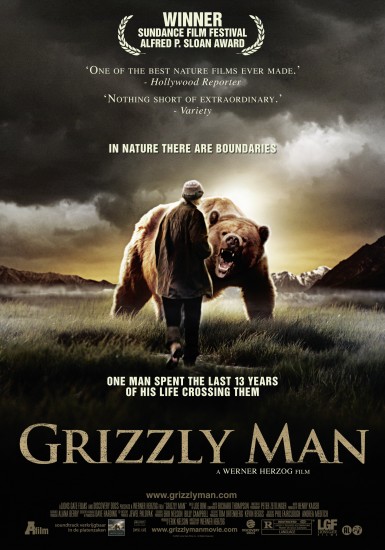
Grizzly Man


It is the third film by director Werner Herzog, that I saw. The earlier two (Aguirre and Fitzcarraldo) and this one, make me believe that the favorite theme of this director remains an enigmatic mix of wilderness, civilization, passion, obsession, life and death. To tell it more clearly - on the risk of being too definitive - his films remains a document of clash of wild and civilization (here both are equally brutal and murderous), the descent of passion into obsession, and the game of life and death (game of survival). And when we look more closely and read more about the director, these are his ways to understand people - and again to put it more definitively - to explore the darkness of human nature.

This film is a documentary about Timothy Treadwell, who lived with Grizzly Bears for 13 summers in Alaskan peninsula and on this last expedition (along with his girl friend Amie Huguenard), he was devoured by one of the bears. Its an irony of sorts at the first look. The man who came to save them was killed by them. But as the film progresses we came to know that its not that simpleton.

Most of the film is actually shot by Treadwell himself, who shot above 100 hrs of footage when he stayed with the wild bears. What Herzog did is to edit them, mix them with some interviews with Alaskan natives, geologists, officials and Treadwell's friends and provided an evocative narration. Herzog's voice is non-condescending either to the bears or to Treadwell, I found the narration superlative. Even when Herzog draws some conclusion and personal insights, we know that he is not giving a conclusion or general simplistic view. His commentary shows that he knows and respects the people and situation, he is dealing with.

Treadwell's courage and his obsessive desire to bond with the wild bears tells us as much about him as about the concepts of courage, bonding, communication and obsession. On Treadwell-ian scale, I am an extremely timid person. Also there is one more point that I am not sure of. Can courage accrue ? What are it limits ? One of my friends, who drives his bike at neck-break speeds says that he does not feel a bit scared doing that stunt. He says that this courage builds up. When asked whether he will try to test his limits, he replies, I don't drive alone, there are people on the road that can not cope up with my exploits. This is the whole point of being in a civilization, there are limits that you think you can cross but are not justifiable (the other way to look at it may be that he lacks courage). He goes to remote areas to drive like crazy, without knowing that it doesn't take two to kill, when you race a bike. Probably that why Treadwell resented civilization and spent so much time with the bears, and wanted to be like them. The point he probably missed is that wild is no better than civilization, in the end they are both same, and in the wild, although there are not written rules, nature rules. The delusional hope that he will bond to bears better than the human proved fatal for him. Treadwell knew bears were wild, film shows two male bears ferociously fight to court a female, and a baby bear is killed by his own father to stop the female to lactate so that the male can fornicate her. Treadwell accrued the courage to move nearer and nearer to the wild, but there was no such communication back from the wild, except in the mind of Treadwell. One point, from Treadwell perspective, is why he did that. The justification he gave for this is to protect the bears but reasons and justifications are seldom same. This documentary tries to explore some reason for the passion that turned to obsession, and gradually delves into his mind and psyche, which is both horrifying and compassionate.

At one point, Treadwell says "Everything about them is perfect". That sentence reminds me of people, who are quite amused by the nature and its beauty. This is not to deny the natural beauty but they loose the sight that beauty has its horrors, and we should respect both. Although not related to this post, I also don't understand what amusement people get when a natural place is turned into a luxury resorts. First they take a natural beauty, make it artificial and advertise and claim how near to nature it is. Do we all really have any desire to go near nature, but can not go near if its too natural, or its just another gimmick to make money and satisfy some residual unsatisfied desires. Its always fun to see how people call the others who come to such places as crowds. We belong to a funny species with some hollow sense of self-importance.

Coming back to the documentary, Herzog also brings two more very important characteristics of Treadwell and where as a filmmaker (and especially the one who has worked in wilderness and with the wild [I am referring to Kinski, no pun intended]), he could relate to him as a person shooting in the face of death and danger. Herzog discovers a filmmaker and an actor in Treadwell. There is a footage of Treadwell acting for himself with his camera on a tripod, where he acts in a film in which he plays some sort of forest ranger to protect bears from poachers. I think the absolute fantasy of an actor is to find someone who can write complex stories and he can act them. His fantasy is to charm everyone with his acting, and its sort of an obsession too. Treadwell made these tapes of himself with the wild bears and showed them to the world. For him, he was the person who wrote heroic parts for himself, the roles of a savior hero. All alone, away from civilization, he thought he was the hero. Also there is an intimacy in those films (especially where Treadwell goes to confessional mode). As a filmmaker, Treadwell compulsively shot in the wild and took some amazing footage of the wild nature, at times taking as much as 20 retakes for perfection. One of my favorite shots in films is where there is a background (think it as a lane where it is raining and no one is there, its evening), the actor comes, acts his/her part and goes away, leaving the empty background, camera stays there for a while. There are several such shots in films by Ozu. In one of the tapes, Treadwell do exactly the same. The background was thick forest with wild winds blowing, he comes to the frame, speaks his lines and leaves, and camera stays there looking at the trees and the wind that sways them, that Treadwell had left behind. I thought there is a certain beauty and a solid metaphor in that.

Although its a documentary and if there is a plot we know it beforehand (Treadwill will be killed by the bear), but like a narrative film, Herzog builds the character of Treadwill with small stokes and we go on adding bits to our cliched understanding of him as the film progresses. At one point of time where some persons reject Treadwell as a freak, Herzog speaks in the narration that he don't think so. But the whole effort was not to justify what Treadwell and all the people like him do and are doing, but its to understand them. To draw a distant analogy, we may think the Emma Bovary as selfish and petty woman but Flaubert tries to understand her in all her flaws and let his readers do that. Its not about whether the person is good or bad but its about to translate them to the audience and readers.

Read the Sensesofcinema profile of Werner Herzog here. Its added in the 41st issue.

Monday, April 14, 2014

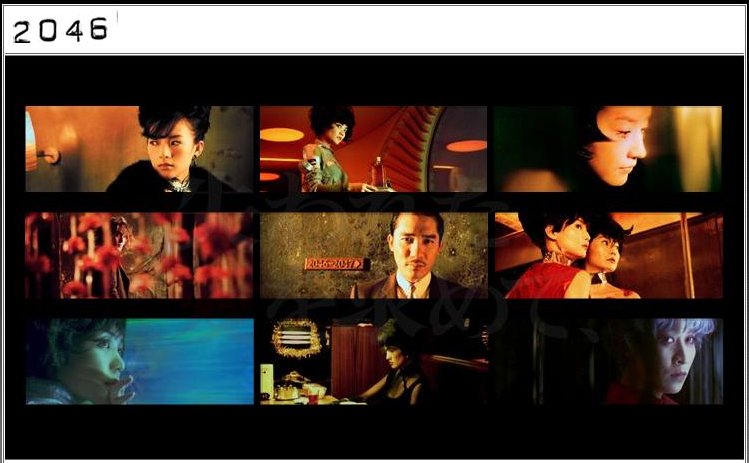
2046


Thanks to Alok, on Sunday evening, I saw 2046 on big screen. Although I was tired from two days of night out, I pushed myself to the screening so that I may go though the experience of visual and sound, two things which Wong Kar-wai seems master in fusing so well with each other, and thus creating the often talked about 'mood', which warrant a big screen viewing.

When I saw 2046 for the first time, I approached it with infinitely high hopes and as a continuation to Kar-wai's masterpiece In the Mood for Love. My first expectation was not fully fulfilled but it did wonders in being a continuation to In the Mood for Love. It had similar themes; it had its sublime moments of deep eroticism accentuated by great music and searching visual and most importantly the devastating power of unconsummated smoldering love.

The newspaper man (Chow Mo Wan, Tony Leung Chiu-wai reprises his character from IMFL) of In the Mood for Love has moved to Hong Kong, is writing erotic novels, lives in Hotel Oriental and now having a playboy sort of living, lots of one night stands, but is never able to get over the past. He comes in contact with three women and they are in one way or the other related to his past affair, an affair which is too deeply felt and too brutally truncated that he is not able to make any new connection, any new memories, always traveling on a train to reclaim his past memories, an effort that keeps him away from making new memories. But as the life goes, people come to your lives and the past rumbles up and down, although eventually you are lost in memories which are all about past, recent past and irrecoverable past. This ghost haunts our hero, in the hotel rooms and alleys, in the curves of women, in any contact he wants to make.

The thing that I most adore about Wong Kar-wai is his thin stories and how they come to life with flair and the mastery of cinematic medium. Wong Kar-wai is a master in making references to the past in the ways few can even attempt. The choice of symbols are too elegant, of all bigger things Kar-wai chooses the number of the hotel room to keep as a reference to the lost love. The material things of the consumer world gets the shape of love objects in his hands, whether its the tinned pineapples with a particular expiry date, or a 10 dollar bill paid at every visit to the lover, or the cards that are played between lovers, or the heaps of martial art books that the lovers exchange, or the fishes in a lover's apartment or the place where the lovers meet, the wall behind and the flicking bulb in a romantic rain. These all becomes the portals to the past; something very personal sticks to them. This concept is too thin to make any art out of it, but Kar-wai does it, and that too with such a style which somehow transport you to that lonesome town where all the lovers in Kar-wai movies reside, amidst the blazing neon lights and never stopping and chattering crowds.


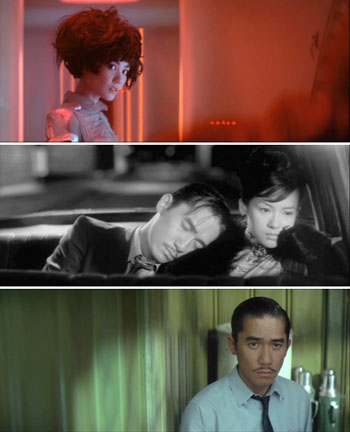
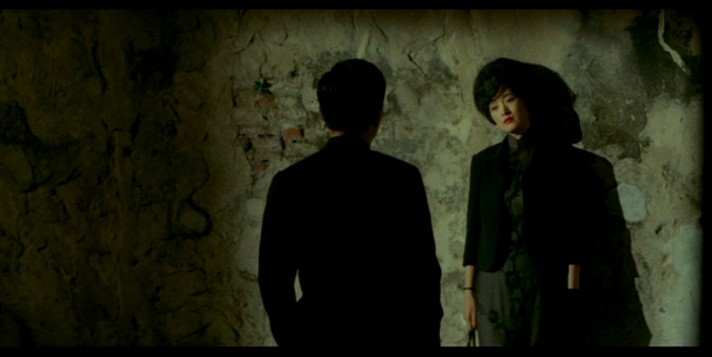
2046 has a bigger canvass than In the Mood for Love. The three stories are connected to IMFL beautifully. The story of a prostitute, Bai Ling (Ziyi Zhang), has the connection to the hotel room where the couple stayed in IMFL, The story of Wang Jing Wen (Faye Wong) is related to her common love for Kung-fu novels with the hero, who tried to write such novels with his lover in IMFL. The third story is about a mysterious gambler, Su Li Zhen (Gong Li), who has the same name as Chow's lover in IMFL (Maggie Cheung). And along with all this there is a futuristic tale of a train which people board to regain their lost memories, but they never come out of it. In all this meandering narrative and brilliant visual, Kar-wai tries hard to give his patent mood, mood of loss, mood of sexuality and mood of regret, mood of secrecy, sex and love.

An important quality of his movies is the way he blends music to visual. This mastery is even seen in the title sequence of 2046, as the array of Chinese letters flash and fade on screen, music come and goes, as if assisting their movement, matching their rhythm. I particularly like IMFL for this reason, the audio-visual treat that it offers, without losing the right note to synchronize camera to music, Su Li Zhen's every ascent and decent becomes an act of love, an act of art of love, her curves, looking back at stairs and her wiping off the rain drops from her forehead becomes such a profound experience that remains with you long after she has reached her small room and finished eating the noodles.

2046 lacked such a trance, at least in story of Li Bing, an oh-so-beautiful prostitute, who falls in love for our hero. Wong Kar-wai has a way with actors, which he seemed to have lost in one of the stories in 2046. Xiang Xiyi is so beautiful and I think a good actress too, but I think she didn't realize that in a War-kai movie you don't 'act' but just be. Her story, which is longest of all, has a touch of conventional acting which Kar-wai actors only show when they are in crowd but with their lovers they become all so muted, all too intense. All the talk and all the rough sex in this story can be muted, can be made more painful and so is the emotional/dramatic impart that Li Bing go though when the relationship does not work out. It becomes a sort of melodrama that we don't expect from Kar-wai. In a Kar-wai movie, tears don’t reach the chin, they are wiped out, with ruthless secrecy, on the cheeks itself. Here the tears reach the chin, several times.


I loved the other two stories too much. The one with Faye Wong in love with a Japanese man, learning an alien language, and writing Kung-fu novels, and the painfully sad and deeply sexy story of a gambler, played by Gong Li, who is trapped in her memories, a female version of our hero. Both the actresses in these stories are exceptionally well. Faye Wong as a love-lorn teenager and a loving android, does such a magic that makes her lost Japanese love, ooze out of her emotionless android body. Gong Li gives a very mature performance with little dialogues and an extremely potent gait in the gloom of her hidden loss. After seeing Gong Li as Su Li Zhen, I thought she is even better than Maggie Cheung of IMFL, who missed a string or two in her performance. A small but extremely efficacious role of Su Li Zhen sizzles the screen with a powerful kiss towards the end, with melancholy music, red lipstick smeared out of the lips as if she just allowed herself to be raped by her present lover, with past carefully keeping a dreadful watch, she walking down the stairs like a fallen goddess.

The film also engages in a good old cliché, 'The Lonely Christmas Cliché', which could have been avoided given the past inventions of ennui by Kar-wai, all those beautiful inventions to refer to hole in the hearts of lovers that merge reality to fiction, producing a modern fantasy. There are some minor problems with editing which a casual watcher like me could also point out, but on a second thought I always question myself, was it meant to be like that, especially in case of masters of medium like Kar-wai, who don't care much for schedules or budget. One more problem with 2046 is its dialogues. As is the case with War-kai's stories, they are either so everyday that no mushy flamboyant communication will go with it, or they are so passionately intense that no communication in words is required at all. Characters will talk about ties and purses, but never about love and how they feel about it. 2046 has some notoriously naive dialogues which, at times, makes 2046 looks like a love child of IMFL and a mushy hallmark card.


But I must say, there is no denying the fact that its a potent sequel to In the Mood of Love, it broadens its canvass, it takes further the similar themes adding the sublime theme of regret and it is as beautifully crafted as IMFL. 2046 opens the memories whispered in the tree hole, and we find out that the wound is still bleeding and Kar-wai captures all that gore and dressings with love and understanding. For me, who so loved IMFL, and somehow want to remain in that realm, in that train of past, 2046, with all its flaws, knocks me down at least in parts and will linger for long.

Sunday, April 13, 2014

Decalogue

I completed Decalogue by Krzysztof Kieslowski and I must say what an experience. And I must also say that Kieslowski now came close to being my favorite director, just standing next to Bergman. There is more to speak about Decalogue as a whole than in parts. And its what I will be doing here. I will try to touch each of the ten episodes briefly but talking about entirely of the great effort. For me biggest question about life and humans still remain the moral questions, the questions like what is more important to us- love, freedom, quality or anything else. Decalogue addresses these questions brilliantly.

One more thing which I really appreciate about Kieslowski is his choice of topics and his sense of awareness about people in general. In one way or the other Decalogue seems to say that we all have histories, we all have some past if not interesting but worth contemplating. All the Decalogue stories happen in the same polish apartment and characters of other stories crisscross at times. In Decalogue, Kieslowski has essentially generated a world of his own, which is infact very universal. There are other things which occur in all parts which try to link the stories in a very wholesome way. One of those is a young man who is just a mute observer in all the parts and camera focusses on him at the most crucial hours of the episodes, the points where the characters are just about to go in a dilemma which is most of the time relate quite precisely to the commandment that episode is addressing. Now since we have come to the commandment thing, I don't consider them to be the driving force in each of the episode, lot of times one episode touches on more than one commandment and you feel more resonated by other questions raised than those by the commandments. One doubt which I had before watching this ten part tour-de-force is its tone, I may assure you with all my contemplation that it not religious or anti religious or irreligious. There is more, much more to them, than the one liner commandments. Most of the times you see coincidences, miracles, odd situations, moral dilemmas on screen which are infact amongst Kieslowski's favorite themes. and all this one hour drama have the trauma of being a human, the pain or pleasure of being in a world which is not predictable, the suspense of our so-called mundane lives.

Moving on this, I find one more interesting thing about Krzysztof Kieslowski, he usually takes a risky road, most of the directors usually have in mind some very basic judgments like God doesn't exist and there is nothing like miracle. Kieslowski doesn't fear from any of these, he presents lots of situation which compels us to think the either way and more importantly with almost equal force. He takes the risk of such type of situations and let the viewers decide for themselves. Decalogue is such important artistic and philosophical document because of this reason also.

One more thing which is constantly becoming a very fertile source of thinking for me is the influence of others on you. I am not talking about the usual bad and good influence, but how life of others influence us, This is one of the constant theme in all the episodes of Decalogue and the factor that glues each of them in a unique fashion. Decalogue seldom takes stands but through the faces of characters which makes them stories rather then documentaries and we feel the versatility of the art of story telling in all its flair, power and youth.

I will move on a brief on each of the episode and what it generated out of me.

Part 1: This is a story about a mathematician father and his very brilliant son. Its a story about fate, unpredictability and human helplessness in the hands of nature's randomness. If I ever forced to pick one episode that I found very close to myself, it would be this one. There are questions about God to questions about death. I started with this episode and I had to wait for about an half to move for the next one.

Part 2: This is a story about a women whose husband is on death-bed and she is carrying a child of another man. She goes to the doctor to ask whether her husband is going to die, Doctor answer will decide who will live, Child or the husband. There are two big questions posed in this episode, first is the role of Human as God, doctor in this case. The second which is ever bigger is the morality issue. The tone of this episode is very somber. This may be regarded as one of the most intense part of Decalogue. Krzysztof Kieslowski always uses figurative to depict the situation of character. This part also has images of an insect struggling for its life in which it miraculously succeeds.

Part 3: Before watching this one, I was thinking how Kieslowski is going to show something like 'Honor the Sabbath day'. This is the story of a married taxi driver who meets his ex-lover on Christmas eve, that unfolds lot of things. The tone here is not particularly playful but has the tension of intimacy. This part conveyed something that is very remote to honoring the Sabbath day, it shows how such days segregate the happy and the lonely, and our basic desire of human contact.

Part 4: This episode is most bold in its theme and content. Here is a story of a young girl who finds a letter by his father titled 'To be opened after by death'. The opening of this letter changes the equations by opening up some secrets inside and outside the letter. This part is must-see for brilliant relationship portrayal and the impact of our hidden past on us.

Part 5: This is a gem. This about killing and its implications. This part shows two killing, one of long, brutal and raw and second one is short and systematic. This episode starts with very straight dialogues that argues 'Punishment is revenge'. Its a story about a killer getting a death sentence and getting killed. This particular part is very disturbing and one of the few that doesn't end in any hope.

Part 6: This one is about love. Can there exist love in some pure form that doesn't need any other special effects to kindle. Is there love devoid of anything we usually associate as depiction of love. Can love sustain without any contact. Do contact corrupt love. Here is a story about peeking Tomek, who watches a beautiful woman, Magda through his telescope, and his pleasure lies in just seeing. There are questions about voyeurism that are also raised in Red but in very different context. In the later part we see Magda do the same to Tomek, do we become the person we love (This was the question that was raised by Liv Ullman character in Bergman's 'Hour of the Wolf').

Part 7: This part is more about the question of ownership than stealing. Here is a girl whose daughter (born when she was a teenager) thinks that her grandmother is her mother. This part searches morality with in the characters and they finds them struck in their own situations. Can you steal something that belongs to you ? The last scenes of this episode is quite heart-breaking and ends with a brilliant close-up of the little girl.

Part 8: This part is most direct in its voice. This raises the questions of morality and circumstantial behavior in very clear voice. This is a story of a old professor who teaches at University. One day a Polish decendant girl comes to Poland and attends her lecture. In that lecture she tells a story about a Jewish girl at the times of war that pulls out some old strings. This episode has very direct reference to part two.

Part 9: This part about an impotent husband who spies on his wife and her lover. When his wife learns about it, she tries hard to save her marriage. This part meanders on the thin lines between sex, love and morality. This episode tries to explore love. There is dialogue which goes it's "in one's heart, not between one's legs"

Part 10: This part is the lightest of all. Its a story of two brothers who gets a treasure of rare stamps after their father dies. This is sort of a black comedy that shows how money brings in complex liabilities and we tend to tar the long old relationship for greed of money.

The themes mix and match in all the episodes, but the common aura has lingering questions of morality that encompass all the parts and that's where we relate to them. Kieslowski never tries to guide us through the rules rather here we see the weaknesses of human heart and mind, and effect of these on our lives and can we ever 'use' these rules to lead a morally perfect life.

Decalogue attains something that may be only a far dream for others. Seldom can moving images have such impact on us and you wonder how much can be said in just ten hours.

Wednesday, April 09, 2014

The Son's Room


Kieslowskian blue grief has turned white. A family losing a block and readjusting the newly found grief into their settled lives. A missing block leaves space, filled with grief instantly, heavy sadness. A stanza taken out of a poem and the poem trying to shuffle words and get a life. A vacant room filled with undiscovered memories, life refusing to let them go or let you out.

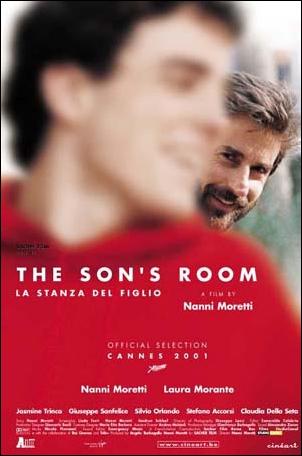
Nanni Moretti's (known as Italian Woody Allen for his comedies) Palme d'Or winner, The Son's Room is an honest contemplation on loss and grief associated with it. It bends objectivity, the endgame of giving easy solutions till the pebbles under the viewer's heart start rolling and breaks it. A reason to the grief, the questions like 'why me', different ways to come to terms with loss give way to an acceptance and filling in of the empty spaces, mending the broken time.

Giovanni (Nanni Moretti) is a middle aged psychoanalyst who is good at giving easy answers and some solace to his clients, but like his clients, he do share the fact that he is not doing them full justice. His beautiful wife Paola (Laura Morante) works in an art publishing house and is the mother of two teenage children, Andrea (Giuseppe Sanfelice) and Irene (Jasmine Trinca).

Film starts by showing the family where everybody is friendly and open, and everybody has some secrets, in short a healthy happy family where there are chuckles at the dinner table and father and son go for long walks. All this calm and light family atmosphere is contrasted by the patients at Giovanni's clinic and the way Giovanni listens to them, always calm, almost uninterested, and very objective, giving comforting placebos to them. Giovanni deals his family with more compassion, an unassuming bourgeois happiness. The grief and illness of his patients and his inability to connect to it and his objectivity that every problem has a solution, strikes back at him, later in the film.

Here the tragedy strikes the family. The shot preceding the tragedy are in Keislowski's tradition. Each member of family is shown nearly missing an accident except for the son, Andrea, who happily boards a scuba diving boat, all geared up and smiling but actually gets into an accident. Unprepared, the family is pushed into a death zone. Giovanni, along with grief, struggles with some guilt because he canceled a run with his son to go on an appointment to his hypochondriac client. He also tries to find out the reason for his son's death, fault in the equipment, gas running out but a slight mystery surrounds and more than that it doesn't give him any comfort from the encompassing grief. As objectivity eludes Giovanni and he is more and more consumed my his own grief, he decided to leave his practice. Irene vents her anger with pulling up a fight at her championship game, which result in her month long suspension from the team. Paola finds other ways to fight it, by talking about Andrea but trying to shut the chapter, it too doesn't help. There are signs of family breaking since the happiness has faded away, sorrow pushing the family member to disconnect, pushing them to weep in bedrooms, changing rooms, all alone, secretly. They do the rituals, they organize a funeral mass to shut the doors to grief, but it tickles into closed chambers, tickles out of the sealed coffin of Andrea, into closed rooms, through some unknown letters, some new pictures, some old secrets, fossilized grief lives.

With surface simplicity, without ringing forced, the film moves to the family's coming to terms with Andrea's loss. They now know that memories will keep coming back, unlike Andrea. Its so cliched to write it but the film manages to do it without any unexpected twists and turns. There is a small indication in the film about the externalization of grief and how it helps the family to accept the loss like a healing, a therapy.

There are some brilliant scenes in the films. Lots of the scenes are at Giovanni's clinic where patients tell their stories and their funny fetishes. After Andrea's death, when a patient tells a happy story of her husband and her kids, Giovanni bursts into tears. The scene where Irene asks to see Andrea for the last time in the coffin. The scene where Giovanni goes to a carnival park to forget or rather vent out his grief, feels isolated and left out in the colorful happiness. The scene where Giovanni finds out that every thing in his home is broken, the fact that he never noticed or even cared in the happier times. One more thing to note in the film is its background score, which compliments the films so beautifully that you seldom consider it out of it. The song in the last scene where the family stands near the sea, although a bit mushy, sounds solacing to the ears.

The film is a tear-jerker without intentionally trying to be so. There are so many muted emotions, repressed grief that the viewer comes forth to drop the tears for the family, be a part of the their grief, their catharsis, moaning for Andrea without knowing him but by knowing what he meant to the family, a missing block in the puzzle of happiness and a cavity for eternal memories to come where we try to cave in, like his family, his friends.

The Son's Room, with all the sorrow and grief, shows how the dead never dies, and how we continue to live with them, manages to be subtlety bright and uplifting. For the sentimental types, its highly recommended but for the emotionally glaciated, its a must see.

Thursday, March 27, 2014

The Films of Brian De Palma

In a recent discussion, one of my friends told me that one is able to understand a piece of work, if he is able to answer all the "whys", and it should lead us to some universal truths. Although, it does make some sense, it seemed a bit simplistic and I was looking for something to counter this "why-why" theory, and it came in terms of Brian De Palma. In the world of De Palma, there are no universal whys to be logically or thematically answered, nothing is true, and something is always broken. The response of viewer is a mix of instant intuitive pleasure and an assured appreciation of the craft of the director. And the pleasures of De Palma films do not end here. They include the pleasure of being misled, the pleasure of being politically incorrect, the pleasure of totally abandoning or twisting or stylizing a film into what can be called "intellectual glamour".

I know, there is so much to write about his films, especially some specific scenes like the terrific parody of dating from Hi, Mom! or several staged deaths in The Fury or the shower scene beginning of Blow out or the cathotic character of Carrie's mother, which was both haunting and caricature. I am little confused how to sum up all the varied observations after seeing his films. One hopeless way is to go film by film and the other equally hopeless way is to go on with my favorite scenes or the themes or stylistic flourishes he usually works with, the things he observes - the doubles and the blondes, the identities and the twins, the split-screens and the split personalities, the obsessions and the phobias, the absurd and its images, the glamour and the gazes, and the gazed, the list goes on.

We know we will miss some points here or there, which are more important than the things that we discuss here but with all this in mind lets start to built a mosaic on an perfectly clean and unreal wall - like a projection screen, exactly like the character of Antonio Banderas does in Femme Fatale. To start take an object to be observed. A blond with perfect red lips and red nails should do, provided she looks made up, fragile and inviting at the same time, she is alone and taking all the attention, observed by some, gazed by the others. She looks as if in danger and it seems she has a secret, even if she has none. The background is either a cold Parisian street of Femme Fatale or the art museum of Dressed to Kill or the mall-with-big-elevators of Body Double. Of all the observers, there is one who really cares for her, without knowing anything about her. Turn his care into obsession and you are near that 'Vertigo' feeling, and then in a beautiful and technically intricate sequence, brutally kill the blonde giving a bloody homage to all those sick slasher films and let the observer obsess. Let him find more. Let him discover information and facts, visuals and sounds. Now to get the full mosaic, take many objects with several identities and many observers and let them observe and obsess and complete the mosaic.

Brain De Palma is nothing, if he is not excessive. One might successfully argue for a while that he does not have excess of ideas (some people claim that he borrows (or rather steals) them from Hitchcock and Godard, or even B-grade stuff), but he, undoubtedly, has excess of perspectives and thus identities for his characters, and he knows and shows that there might be still more vistas that he might not know or show. In Snake Eyes, the thematic idea of having several perspectives, gets translated to the technical idiom of having several cameras to capture 'all' in the boxing match where the murder takes place, thus making an impression of you-are-being-watched safety with technology playing superior, although De Palma is always aware that, like a noir hero, it is powerful yet flawed and like him or any other thing that collaborates with humans, it is destined to fall. He knows, if one misses even a single perspective, he can miss the whole truth. To get an analogy of perspective in his films, put holographic slides where each viewer sees a different superimposed picture, and then let them discuss and find out what they actually saw, gather the visual clues, figure out what is the truth, if any, and more importantly let them discover that they are missing some pieces and perspectives of the image.

Also, De Palma does not feel ashamed or shy to tailor the perspective as he wants to, there are blurs, wide shots, make ups, blocking things to 'create' that specific perspective, which in theory is still a valid perspective but the question is about the honesty of the 'made' perspective. De Palma perspective are as self-aware and self-reflexive as images can be. They might is purposefully made, but at the same time, show how images can be purposefully made, how it can be shown what someone wants to 'show' ( or in some cases "show off"), and how we see what we want to. The whole mastery of images in De Palma films, if at all try to make a single strong point that is about the dishonesty of images itself, especially the filmed images.

And that’s when we come to the most important feature of Brian De Palma films, artificiality and sometimes a perfection that borders on senseless artificiality and exuberant absurdity. There is artificiality in moments of love, leisure and murder, which prompts a normal viewer to casually comment, "there is something missing in the film", may be they miss the usual kicks they are used to or they refer to newbie-critic favorite question "what’s-the-use-of-it-all" rather than admitting "I don’t get it" ! If you look into his films from thematic point of view, then there is a murky road ahead or there is a delta or a river mouth. I mean to say, on surface, they have no theme and if looked into too deeply they have a handful. But I personally feel, this autopsy for thematic search is not a good way to see De Palma. De Palma is best seen, scene by scene, a scene is absorbed for intuitive pleasure (that may be guilty) and stored for contemplation later. This series of images might give a thematic integrity, but one should not care about that in De Palma's film. That’s usually is the onus of a film to reveal itself, sooner or later, not the viewer to extract it by force. One can be attentive at best, which De Palma films strictly demands for all its visual crosswords. Everything should mean something results in stupid searches and stupider answers like "there is something missing in the film”!

I know, I should hate a person's views if he says that he "enjoyed" the murder scene in Dressed to Kill, but it is exactly what I did. Murder is bad, but it looks good in De Palma's films. If he mixes a shower scene with the murder, which he frequently does, it becomes even better, a guilty pleasure. But what sets these scenes apart is the mastery with which they are crafted and executed which at times include sly parodies of genres in which he himself operates and even his own film (remember the brilliant opening sequence of Femme Fatale). Camera, with its glamorous composition and precise feline movements, becomes the star for the moment, you see the magic of editing and you realize that how things can be fabricated by that and witness that much talked about but rarely seen thing - style becoming substance. De Palma's films become great guide to deconstruct movie making, may be second only to Godard.

We have seen and we know that De Palma fails when he tries to solve a mystery in his films or try to give an ending. We do not expect these things from him. We expect being tricked, titillated but never totally fooled by some end result. I didn't like the end revelation of Dressed to Kill much, because, I think, making conclusions, doing any psychoanalysis, giving such simple answers is not the forte of Mr. De Palma. In contrast, I absolutely loved the end sequence of Body Double, which doesn't try to solve anything or give us any final answer, although viewer is free to infer things. That’s why, I guess, for me most of his film play the best for 3/4th of their running length, where we are left floating free in pool of perspectives and visual information, or an illusion or a dream which are played out with stylistic verity and exactitude. He is best in his artistic flourishes and thematic/genre homage, and above all in the creation of a brave film language that is both original and derivative, inviting and playing with misinterpretations but never fearing them.

Tuesday, February 11, 2014

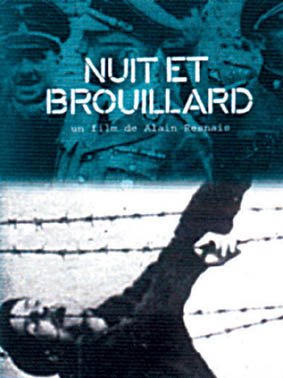
Night and Fog


I watched Alain Resnais' 1955 documentary, Night and Fog, on the horrors of holocaust and never ending tryst of humanity with such horrors. The documentary ends on a brilliantly pessimistic and cautionary note which raises this documentary up above the sheer footage of horror and inhumanity. Narrated and written by Jean Cayrol, who himself survived a Nazi camp, following are the closing lines.


Who among us will keep watch from this strange watch tower to warn the arrival of our new executioners ? Are their faces really different from our own ? Somewhere in our midst lucky Kapos will survive, reinstated officers and anonymous informers. There are those who refused to believe, or believe only for brief moments. With our sincere gaze we survey these ruins, as if the old monster lay crushed forever beneath the rubble. We pretend to take up hope again as the images recedes into the past, as if we were cured once and for all of all the scourge of the camps. We pretend it all happened only once at a given time and place. We turn blind eye to what surround us and a deaf ear to the humanity's never ending cry.

Wednesday, January 22, 2014

Tarkovsky's Rublev


I completed Andrei Tarkovsky's Andrei Rublev last night, my first of Tarkovsky which was long in the to-see list but I was deterred by its length and my shallow understanding, so saved it for a better day. It will take some time to think about the film and the passion of Andrei Rublev to sink in. What I really liked is the narrative that refrains from following the protagonist consistently. I was expecting that like any epic film about a legendary character, the film will be from Rublev's perspective and all the events and episodes would encircle him, but to my pleasant surprise this was not so. As the commentator Vlada Petric rightly points out - Tarkovsky doesn't want Andrei Rublev to be an epic film in the classic sense, lacking a central hero protagonist, it is the film's spatial and thematic breadth that function on an epic level evoking history by a synthesis of myths, legends and folklore.


According to Tarkovsky the task of a director is to pick out and join together the bits of sequential facts, focusing on what lies beneath them, while revealing what type of chain hold them together. Working on this principle the seemingly dis-jointed episodes of Andrei Rublev can be viewed as narrative bits, joined together by poetic associations of various images.

And here is what Tarkovsky has to say about his movie Andrie Rublev in the documentary Andrei Rublev: A Poet of the Cinema

The pressure Rublev is subject to is not an exception. An artist never works under ideal conditions, if they existed, his work wouldn't exist, for the artist doesn't live in a vacuum. Some sort of pressure must exist, the artist exists because the world is not perfect. Art will be useless if the world is perfect, as man wouldn't look for harmony but simply live in it. Art is born out of ill designed world. This is the issue in "Rublev": the search of harmonic relationship among men, between art and life, between time and history. Thats what my film is all about. Another important theme is man's experience, in this film my message is that it is impossible to pass on experience to others or learn from others. We must live our own experience, we cannot inherit it. People often say: Use your fathers experience! Too easy: each of us must get our own, But once we've got it, we no longer have time to use it. And the new generation rightly refused to listen to it. They want to live it but then they also die. This is the law of life, its real meaning. We cannot impose our experience on other people or force them to feel suggested emotions. Only through personal experiences we understand life. Rublev, the monk, lived a complex life. He studied with master Radonevsky, at the Holy Trinity but he lived in variance with his teaching. He got to see the world through his masters eye. Only at the end of his life, that he lived his own way.


I completed the film in two days and it was an experience to go through. Much should emerge after contemplation and analysis on the movie, but I was really taken over by The Bell episode and how beautifully it captures the spirit and travails of creation and getting your own experiences. For me it worked like a short film complete in itself but as a part of this epic cinema, it gather much profound meanings.

See Andrie Rublev's paintings here. It also contains his celebrated masterpiece The Old Testament Trinity, which is also shown in the film's final moments where it miraculously turns to color.

Wednesday, January 15, 2014

Fahrenheit 451


Apparently based on a futuristic novel by the same name, Fahrenheit 451, is about something else, and that is beyond love of books. The film sets its mood and tone right in this simple dialogue:

Boss: What does Montag do with his day off
Montag: Not very much sir, Mow the lawn.
Boss: And what if the law forbids that ?
Montag: Just watch it grow, Sir.


This is what a law-loving Boss, asks , our hero Montag, on the eve of his promotion, probably to gaze the morality and servility of the youngman. Montag, a fireman of the time to come , is very good at his duty of finding and burning books. He belongs to the times, ruled by a government that thinks books are root of all evil and sorrow and the act of reading them, sheer perversity and it gives our book-loving director an alibi to put the best of the books to flames and a certain point a book-loving woman also to the fire who refuses to be parted away from her books, a classic 'book as life' metaphor.

In a seemingly happy and definitely dormant society, people caress themselves in the subway trains, not because they are narcissistic but all the normal social contacts are dead, and to add to the seclusion, they are addicted to television to an alarming level. There are shows where you are made to think that you are part of them, there are shows to make the whole alien population a family and when I am saying all this it actually doesn't seem to be too distant, too futuristic, and with a little bit of extrapolation one can suggest that the whole set-up is already existing. In todays world we may not killing books in flesh, not we are certainly burning real books in spirit. The futuristic world that Truffaut paints is stark and cold in its boundaries, people inside their houses stick to their wall-tvs and become that virtual reality. When someone asks a lady how do the firemen find out which household has books, the lady looks up and shows the few houses that don't have the antennas, a metaphor of a social and mental divide.

The film has lot of Hitchcock effect, there is a dream sequence which reminds of Vertigo and the background music is also by Bernard Herrmann, who was a usual collaborator with Hitchcock. Also, in the spirit of the film, the titles are spoken and to make people really long to see the written text like the people of the genX where the film is set in, first printed words are shown only after 40 min of the movie where Montag reads the first paragraph of Dickens' David Copperfield -- David is born as the clock strikes 12 and so do our hero.

Fahrenheit 451 works as a cautionary tale in two ways, the first is about our quest for happiness and comfort and where it can lead us to and second its about the constant effort to check our liberties and how our passions will always find ways to break those checks and shackles, and more importantly the amalgam of the two, how we are forced to sacrifice our liberties for day dreams of comfort and happiness.