{Of all lies, art is the least untrue - Flaubert}


Monday, January 29, 2007

Films this Weekend.


I caught a mild fever midway this long weekend and utilized some of it to see films. Here is the list in chronological order.

Guru: Nothing much to appreciate, except Vidya Balan's death, it is the only high point of the film, sort of pulled loose strings together for a while. Also, Mithun Chakraborty is very good and his sincere contempt for God is only instance I saw in recent Hindi films, where a character shows it - without any guilt, doesn't succumb till end, and is not punished for it.

Salaam-e-Ishq : Nothing to talk about, except that its almost four hours long. I liked the last song sung by Kailash Kher. Its goes "Ya rabba, dede koi jaan bhi agar, dilbar pe ho na koi asar", at last they understood.

Innocence: I liked it but I have one problem with it, its ending. [Spoiler Ahead]. There can be two major interpretations of the ending. After the purple-girls are 'released' from the school, one of them, Bianca (Bérangère Haubruge), go and play under a fountain with a young boy, giggling and splashing water on the boy, and scene closes as the film has started, with fluids and bubble. One simple reading is that she is now liberated and freely exploring her sexuality, which she has meticulously endured, saved and cultivated. The second reading might be dark, her release from school may her descent/trapping into much real and horribly concealed world, earlier she was doing one stage show (which is film's metaphor for prostitution), now its a daily ritual, she is now everybody's whore, free but in fierce competition, and constantly and unconsciously catering to the sexual drive of the world. This revelation will be her true loss of innocence. If the film meant the first one, I looks a bit cliched, even if it is an amazing visual treat filled with horror in every corner (even a simple act of young girl playing on a swing creates sense of horror and fear of unknown), acted by an absolutely brilliant cast, especially the girl who plays Iris (Zoé Auclair). If it is of the second kind, it makes lot of sense. But I feel, its a mixture of the two.

L'Atalante : What can I say. Although this film is set on a ship with newly-wed couple, it seems that Jean Vigo has made a character out of Paris, not just a city alluring and cheating at the same time, but an enticing red lipped whore, a far-off love interest. The farewell scene of Juliette (Dita Parlo) is comic but a single look on her mother's face changes it to tragic. The look at the face of the thief is so feeble that we feel more bad for him than for the Juliette, whose purse he stole. Amazing montage of the rage of crowd and cruelty of a big city. The erotic love scene where distant lovers make love, or the underwater sequence (such sequence in 1934, amazing !) where Jean (Jean Dasté) searches for Juliette or the scene where Juliette walks on ship's deck with foggy background. Idiotic Jules (Michel Simon), who involuntary seduces Juliette and the peddler who charms her and the city where she is lost. This is one of those few films where the re-union of the lead pair is both real and also has dusky dream-like quality.

Suzhou River: Good film. Its like Vertigo, set in modern China and the direction is inspired by Wong Kar-wai. The leads are very good especially the actor who plays Mardar (Jia Hongshen). There is one scene where he is drunk and he acts amazingly downbeat. The film looks too adamant to see allegory in the obsessive tale of love, that I think is its weakness.

Zatiachi: The beginning of the film is very cinematic, the way few characters are introduced side by side their past and their skills. The music and fights are very fresh. The sword fights are short and bloody in an alienating and shocking way. A good tap dance finale. A novel Zatiachi.

Ghost World : Good Film. Thora Birch is extremely good as Enid, who hates extroverted, obnoxious, pseudo-bohemian losers. Its heart breaking to see how all those whom Enid thought will never move, move ahead of her. Great dialogues. In one Seymour (played by Steve Buscemi) says "Maybe I don't want to meet someone who shares my interests. I hate my interests." Wow, someone finally said that ! Also Seymour says " I suppose things are better now, but... I don't know. People still hate each other, they just know how to hide it better."

Frozen : They say its about artistic freedom but it is primarily about artistic void. It is said to be based on real events, about the artist, Qi Lei, who is obsessed with death and tries to stage his death through ice burial. With a twist at the end, film mixes art, life, death and 'will to die' nicely. Lead actor ( Xiaoqing Ma) is very good, he says so much without dialogues, he also played the lead in Suzhou River. Not very good, but a nice small film about an artist in trouble.

Gerry: Saw first 45 mins and slept. Its moving to nowhere, and I am liking it.

Will write about some of them in detail later. I am preparing a list of films and film-makers from East Asia and South East Asia, that I need to see. Will share it, once its done.

Tuesday, January 09, 2007

Omkara and Expletives

Disclaimer: Please don't read if you easily get offended.

There was a huge debate over the use of expletives in Omkara. Though very late, but here is my take on it. Just to clarify, I am from the land where the film is supposedly set and I am a big fan of all those expletives, this post is an effort to do justice to what they deserve.

Before we proceed let me have a code of referring to them. They are not meant to be written (especially not in English transliteration) so we are not going to write any one of them here. We are going to refer them by the first English letter in their transliteration. Also, most of the impact of the examples I quote will be lost, because they are written, not spoken. Call me prude but here we go.

To say the least, I hated the use of expletives in Omkara and the way the whole debate was hijacked by was it a right decision to use them or not. No one ever even bothered about how to use them, which was the whole point. Expletives are never used as exclamation marks. There are two reasons for that. Firstly, they become too obvious (which is bad for their ample use), secondly, exclamatory use make them a statement of sort, which they are not. If I say, "kinghe jaa raa, B" (where are you going, B), it doesn't make any sense. No one sensible will use them like this. The correct use is "abe kinghe jaa raa, B sunta hi na" (where are you going, B doesn't listen to me). It makes perfect sense. Here B doesn't qualify the person but his act of not listening. Note that there is a slight tinge of care for the person you use them for.

Let me make an parallel for the use of expletives. We have a sweet-dish up north, its called gur-gajar. In a small setup (its called a Kohlu) where gur (jaggery) is made, when gur is in the last stage of its making, we put some skinned carrots (cut them across the length such that they don't slice into two, like we do in green chilly pickle) into steamy hot gur, stir them for about 5 mins or so till they become soft and juicy, and then taken them out. After half an hour (just to cool down a bit, but still too hot to handle), they are picked out whole and put in mouths (this usually causes mouth ulcers for children, but who cares). Now there is no single entity, - no gur, no carrot, they are joined into holy matrimony of sweet love. As the carrot enters the mouth with juice dipping from chin to chest, it is an experience and sight to behold. Expletives are like carrots, and the language like gur to begin with. It is not to say that language sweetens the effect of expletives, but it is to say that it assimilates it, they are joined seamlessly. Any attempt to separate them is done in bad taste and stinks of vulgar sensationalism.

Experienced and well meaning people mostly use expletives in between the sentence and never raise their voice while speaking them. They go with the flow of the sentence, adding a more lyrical quality and liveliness (immediacy). There is no show off, they are lukewarm honey dropped from heaven in between the sentences, adding the warmth. No one notices them in the sentence, but every one know they are spoken. For Gods sake, please don't use them like the F word. First thing to note is they are not meant for abuse. They are not just fillers. They are the flavor. They should seep in effortlessly and slowly over time, like flavor in hot-soft muffins, not like an add-on of hard nuts. Its a lazy way to use them. If one watches closely, he/she will notice that most of the expletives are used for inanimate things, situations and life as such, not for people. Simple use of expletive comes with inanimate but personal things, which we love, for eg. scooters, "yaar, B, start ho jaa, G lega kya".

In Omkara, barring few occasions by Deepak Dobriyal, no one used them properly. It was one of the biggest reason why I didn't like the film much. You can call be names, but I get really sentimental about expletives. I see them as a part of culture. At last, after all this talking, I should give you an example of the correct use of expletives. In Khosla ka Ghosla, when Khoslaji (Anupam Kher) tells his friend, Sahni sa'ab (Vinod Nagpal) that his son doesn't like his name, he replies "Khosla saab.. aaj kal ke bachche bade mnc mijaaz ke hote hain...unhe ye kabootron waale naamon mein sharmindgi mehsoos hoti hai ...nayi ?.. unke saath ek baar compromise kar lo, saare budhape ki insurance ho jaati hai...ooo jee.. sach poocho to ye saara desh hi B compromise pe chal raha hai.. hai ji...". The honey dropped from heaven and it was a moment of pure bliss.
NB: This post would not be possible without the help of Vivek and Rajeev. Thanks !

Monday, January 08, 2007

A Poem by Auden

Read this poem, The Unknown Citizen, on Vidya's blog. She says " [it] leaves me with a "wow" every time I read the last two lines". For me it shoots 3-4 lines before that. The last two lines take time to sink in but when they do, they sink very personally !

The Unknown Citizen

He was found by the Bureau of Statistics to be
One against whom there was no official complaint,
And all the reports on his conduct agree
That, in the modern sense of an old-fashioned word, he was a saint,
For in everything he did he served the Greater Community.
Except for the War till the day he retired
He worked in a factory and never got fired,
But satisfied his employers, Fudge Motors Inc.
Yet he wasn't a scab or odd in his views,
For his Union reports that he paid his dues,
(Our report on his Union shows it was sound)
And our Social Psychology workers found
That he was popular with his mates and liked a drink.
The Press are convinced that he bought a paper every day
And that his reactions to advertisements were normal in every way.
Policies taken out in his name prove that he was fully insured,
And his Health-card shows he was once in a hospital but left it cured.
Both Producers Research and High-Grade Living declare
He was fully sensible to the advantages of the Instalment Plan
And had everything necessary to the Modern Man,
A phonograph, a radio, a car and a frigidaire.
Our researchers into Public Opinion are content
That he held the proper opinions for the time of year;
When there was peace, he was for peace: when there was war, he went.
He was married and added five children to the population,
Which our Eugenist says was the right number for a parent of his generation.
And our teachers report that he never interfered with their education.
Was he free? Was he happy? The question is absurd:
Had anything been wrong, we should certainly have heard.


-by W. H. Auden

Tuesday, December 26, 2006

The Time has Come...

As the cliché goes, the time has come. I will be on a trip, starting today, to Bangalore, Hassan, Belur, Halebedu, Kalasa, Kudremukh, Hornadu, Mangalore, Udupi and back to Bangalore. I don't know much about the places, just read about them on internet. I am taking my camera along for company. I will be back to Hyderabad next year. So, its the last post for this year.

About personal life, it went fine, but I am sure it will take some drastic turn next year. Professional life was good too, may be because I don't care much about it anymore. This year was not a good year for me film-wise, I was able to see about 80 odd films out of which 20 were Bollywood/Hollywood types. There are few films that I saw this year, that changed the way I look at them and were immensely satiating. Here are few of them:

Fat Girl: I was surprized by the audacity of this film and the way Anaïs say, "Don't believe me if you don't want to". Highly recommended.

Ten: It is the most experimental film I saw this year. Out of the ten episodes, there are few that are alarmingly heart breaking and true. Dancer in the Dark closely follows as runner up in the experimental category.

3 Women: The performance of Shelley Duvall is extraordinary. Either she acted too well, or she is like Millie in real life.

Week End: An example of art of the extreme type and film making of the highest order. Its disturbing as heavens and funny as hell.

Kinsey: I always felt that biopics are not film-material in any way but this film proved me wrong.

Late Spring : Another film by Ozu that proves that you can make same film with same cast year after year without losing an iota of novelty. The last scene where the old man peels an orange is even more painful than the farewell of Noriko.

Code Unknown : Its a crumbled masterpiece that shows us how fragmented and interconnected our lives have become.
I have a feeling that I am missing some films in this list, but one can always write next year !

Few directors I discovered later this year

Robert Altman : A truly American director. He visualized our society as a troupe sitting under shade and sunlight of a big banayan tree stage, with life of hopes and dreams crossing each other, ruptured and reared by the sentiments of family, sex, politics, race, cast and condition.

Mike Leigh : A truly British director. I saw three of his films this year, Naked, Secret and Lies and Vera Draka. Although we know he has mellowed down in all these years, but what strikes in his films is the human chord, the perfectly believable characters, the sentiments without going sentimental.

Brian de Palma : A true successor of Hitchcock. The Prom party scene in Carrie is like a greek tragedy (In Indian tradition, one can vaguely equate it to the story of Kannagi), everything good and bad is destroyed, and the climax says that this tragedy lives on. And above all, orgasmatic crucification of Carrie's mother by flying knives.The Museum scene in Dressed to Kill, is a great example of how camera can do all the menacing and peeking. Its also an example how a simple hooking scene between strangers can be turned to art. Reviews of his films here.

In Bollywood films, I liked Jaan-e-man, Khosla ka Ghosla, Lage Raho Munnabhai, Gangster and Taxi no. 9211, in that order. I found Rang de Basanti, Omkara and Dor quite overrated, in that order.

Reading wise it was a bad year but I think it was better than the previous one. Thats all I read.
1) The Sorrows of Young Werther
2) The Old man and the Sea
4) The Importance of Being Earnest (text here)
5) The Overcoat, The Nose and Dead Soul
6) The Stranger
7) The God of Small Things
8) Short Stories (Parinde and Kavve aur Kala Paani ) by Nirmal Verma (Anubhuti profile here)
9) Poems by Nagarjun (Anubhuti profile here)
10) The Quilt and other stories by Ismat Chughtai (more links here)

and Alok, I still include short stories along with novels :)

Happy New Year to all !

Wednesday, December 20, 2006

Gong Li


Now it is the time to write something about her. I was almost enticed by her small role in 2046. Doomed gambler of love, thats what she plays. I find something sensual of higher order in smeared lipsticks (I even liked Urmila Matondkar's lipstick smearing act in Pyaar Tune Kya Kiya). 2046's final passionate kiss is very erotic, potently dangerous and doomed like love. But nothing come close to the way Gong Li leaves the frame in 2046, with out of bound lip color. I don't remember it fully but I found camera almost fixed on her hand wearing a black glove, carrying a purse and her hips as she climbs down the stairs or may be she walks out on a paved road. At that time, I gave all the credit to Wong Kar-wai. But the next film (The Hand segment of Eros), although also by Wong Kar-wai, proved how she can elevate and blur the line between desire, love and pain of its impossibility. The Hand is more explicit and shorter than 2046 and In Mood for Love, and so it might not work on their level (also, we have the same by Kar-wai many a times), but Gong Li makes every thing delectable, delicate and delicious. Gong Li has power to utter words in a way they mean both rejection and approval, with a firm face, and it all points to a dangerous territory ahead. She is just opposite to other excellent actress, Isabelle Huppert. While Huppert is so bland, covert and distant that what ever little precise emotion she displays gives sublime pleasure, Li displays an oriental mix of emotions, spicy and suppurated, its both pain and pleasure to watch her simmer and sigh.

I saw Raise the Red Lantern last week and the younger Gong Li as as good as her consummated version. The film starts with her close up where she accepts her fate and then she moves on a journey of power, family politics, sex, betrayals, deaths and finally madness. The film, shot in beautiful reds, is a mix of traditions, entrapment, soap opera and alienation, works like a Kafka-like parable. Gong Li's Songlian tries to play the game of the house like the other sisters, trying to be as sinister as them, but eventually loses everything, but in all this she becomes our window to the dark secrets of the house of red lanterns. She elevates this visual treat to something universal and bigger than its parts. Gong Li's Songlian longs for VIP foot massages and the red lanterns, not for the company of the master but for the power it brings along, and as the game becomes more complex, she single-handedly injects ghostly hysteria into the film. Li manages to became a living ghost in the house, a token of all the misdeeds and family secrets, consumed by both. She has gift to fill atmosphere either with unbearable longing, or amorous danger, or both. I must see, To Live and Farewell My Concubine soon. And I think she must work with Almodóvar and Lynch at least once. In Lynch's film, she can even speak Mandarin, it wont obscure the film further.

Sunday, December 03, 2006

Robert Altman and American Cinema


When an artist dies, instantaneous interest is generated in his works among general public and his works are revisited by critics. I had not seen any of the film by Robert Altman, till he was alive, although several times I was just about to rent his films (last to last week, I shortlisted two films by Robert Altman and two by Mike Leigh, and decided to rent the later two), but I was intrigued by his films as they appear from reviews (great opera of a wide and varied ensemble cast with a central event having small scale character studies in particular, and American culture in general). I must admit that I have a general prejudice against American films for no solid reason, given a choice I will always choose the other.

Earlier this year, I compiled a list of directors to watch, country-wise, and intentionally left American directors. If this a confession box, let me confess, I have not seen even a single film by John Ford, Terrence Malick, Francis Ford Coppola (saw one of the Godfather, many years back on TV, I don't remember anything from it, not even the score by Nino Rota), John Huston, Howard Hawks, Robert Aldrich, Michael Curtiz, Vincent Minelli, Sam Peckinpah, John Cassavetes, Brain De Palma, Buster Keaton, Nicholas Ray, Sergio Leone, Andy Warhol. I have seen on film each by Orson Welles (its The Trial, not Citizen Kane) and Douglas Sirk. So, the only American directors which I have seen are Martin Scorsese, Woody Allen, Stanley Kubrick and Billy Wilders. In the contemporary directors I score bit better. I am more or less alien to the genres of Film Noir, Musicals and Westerns.

So demise of Altman, not only generated interest in his films, but American Cinema in general. To cleanse some of my guilt, I have planned to watch films by Altman for 2 weeks and following is the list I came up with, and in that order.

The Player
Nashville
Gosford Park
McCabe and Mrs. Miller
Brewster McCloud
M*A*S*H
3 Women
Short Cuts

Planning to write short notes on these films once I complete them. This list is based on reviews, trying to get a mix of his old, new and cult films, and more importantly the availability of films here. If you want to recommend any more Altman films (or any American director and films), please do so. You can help a poor soul in guilt-reduction.

A heartfelt obituary to Altman here. A more comprehensive one here. Altman's sketch by a fan here.

Vera Drake


The tagline of the film says - Wife. Mother. Criminal. , but for sure Mike Leigh is not interested in trifurcating Vera Drake into these boundaries or joining these three into one character. Its the humanity of Vera and the film that touches us. Here is a simple story of a old woman who helps young woman out, alongside being a mother, wife and a daughter.

The film is clearly divided into two parts - the one where Vera do what she thinks right, and the other where law do what it deems lawful. The debate whether she is right, or law lawful are skipped, there is no statements of sorts. The moral fulcrum of the film lies in the eyes of Vera, played with amazing beauty by Imelda Staunton. In one of most absorbing performances, Imelda Staunton plays Vera with so much common-ness that her quagmire mirror the times she live in, and also to some extent touches the ideas of social acceptance of personal morality. When asked by a detective whether she performs abortions, she says that she don't understand what he is saying, she says she just helps out wretched girls in trouble. No doubt, she is part of some bigger game, which caters the upper class and she is being used, but Vera assistance to girls and women who need some help, is purely personal. Like other such films (Talk to Her, Dancer in the Dark), Vera looses the battle with law.

Towards the second half, the film veers into full fledged melodrama, like the complete turn in Vera's life. Although Vera understands her fate, but she is more worried about her family, and Leigh paints this film about humanity with master strokes, with the help of an excellent cast. The leading among them is Imelda Staunton, whose one look, when the detective come to arrest her during the Christmas party, is more than devastating in a split-second, to say the least. That one look provides such complex feeling of care for the family and acknowledgement of the danger on the doorsteps, danger that will not only engulf her and her respect but her family also. Others in cast are also excellent, especially the odd couple Ethel (Vera's mousy daughter who works in a Bulb testing factory, played by Alex Kelly) and Reg (a lonely neighbor, whom Vera invites at home, played by Eddie Marsan). Reg provides the emotional high point of the film when he thanks Vera for the Christmas party and declares it "Smashing", its seems to be the sincerest form of gratitude to Vera (and at the time Vera needed it most). He, later in the film, even defends Vera for her stand in his simple statement, 'It's all right for the rich if you've got six kids, but if you can't feed them, you can't love them.' Mike Leigh is master in making such credulous characters without even a hint of caricature or stereotyping.


At one point, I thought that Leigh has set up stage for first gaining sympathy for all-good Vera, innocent mother helping all others and then using this sympathy to bring forth emotions as Vera is convicted. But I think there is something wrong in this logic. Her decision to do abortions may be because of several reasons (at one point when the detective asks her whether she was raped when young, she starts weeping) and Vera's goodness is not to cover that up, never in the film, her goodness tries to cry out of a scene. I am not too sure about this, one line of thought may be that she could be made not so good (having some rough edges) and then the response to her actions may be more equivocal than for the all-good Vera, but having said this, Vera's character comes out so real and believable, every detail of her character smells of stoic compassion, that I would not like to doubt director's intentions.

This film is not without a moral center, it is not neutral or just observational, but the film is more interested in the nature of family, humanity and morality. Vera Drake is a film about an issue, without either being condescending, preachy or falsely pretentious but more importantly, its a story about a good person and her world (society), and what it takes to be so. Vera Drake lets us believe that such people exists.

Thursday, November 30, 2006

Secrets and Lies : Brenda Blethyn as Cynthia Rose Purley


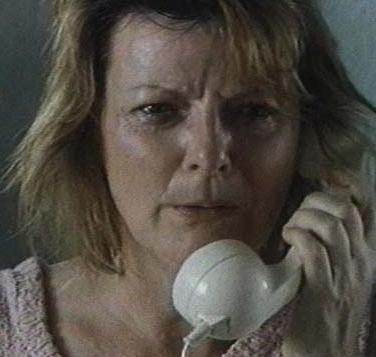
She sometimes blurs the line between a fool and a clown, both of tragic melodramatic shades. In a long shot (about 6 mins or so) of her first meeting with her daughter, Brenda Blethyn's Cynthia Rose Purley acts and laughs and cries and mutters sweetheart (with 'H' silent) all the times. A viewer is left puzzled on what to believe and what to dismiss, much like Hortense (Marianne Jean-Baptiste), her lost daughter. But inspite of all this, we are made aware that she is acting like everyone in distress acts, not to cheat but to protect herself, and in all this mess her humanity surfaces, behind the surface of Secrets and Lies. Blethyn acts as a pivot to Mike Leigh's film not like a central character but a character who is lost amongst others. In the birthday party sequence, we can see the discomfort on her face, the uneasiness to accept a multi-bedroon apartment, which she tries to fill in by uttering inanities like the one who try to fit in between some indifferent people. Rejected and ignored by all, the mother in her is still alive and kicking, but so are the secrets, and so are the prejudices.

At one point in the film, Cynthia says "You gotta laugh, ain't ya sweetheart? Else you'd cry", and Brenda Blethyn, while acting, takes it as a rule to be Cynthia. Brenda Blethyn lets her raw and bare kitchen-sink-slice-of-life act remain so, even in her catharsis scene she remains same Cynthia speaking innumerable 'sweethearts' and 'darlings', does not give a sign of character volte-face. No close-ups for her, no staged dialogues, she is our own sitcom heroine, injured and failed like a dysfunctional family. Although I liked the film (compare the brutal nihilism of Naked to the uneasy tenderness of this film) with some reservations (I found few scenes towards the end out of tune), but Brenda Blethyn's performance is invaluable and becomes almost priceless on the second viewing.

Friday, November 24, 2006

Boredom and Unhappiness


Rajeev posts some quotes by French author Céline. I was reminded of early last year when Alok sent me some of those. The one that I liked the most was:

“Living, just by itself - what a dirge that is! Life is a classroom and Boredom’s the usher, there all the time to spy on you; whatever happens, you’ve got to look as if you were awfully busy all the time doing something that’s terribly exciting - or he’ll come along and nibble your brain.”

...Awfully busy in doing something terribly exciting.... I usually find myself doing that, at least pretending. Going to Nature camps, Salsa classes or 10k runs for no purpose but to fill in time with some physical exercise. I fear boredom will nibble me anytime. No amount of reading or movie watching or talking to friends or smoking make me wiser than boredom. Yes, there are rare moments of bliss, when I fearlessly sit alone and even boredom deserts me.

The second one which I found very insightful is:

“Never believe straight off in a man’s unhappiness. Ask him if he can still sleep. If the answer’s ‘yes’, all’s well. That is enough.”

I don't like when people say they are unhappy (Although I have done it several time, but I don't use the term 'Unhappy', I find too strong or may be I fear it). I have become very skeptical of other people's unhappiness. Is it lack of comfort or lack of perfection in their bourgeoisie picture of life or just glitch of irritation or boredom. I believe that if a person is living, he/she is at least marginally happy. Living has some inherent gratification in itself. If you don't look for bigger meaning and bigger pictures, I believe that life is not inherently unhappy or unpardonably painful. There are unhappy lives, we must acknowledge that but pure unhappiness is as rare to find as pure happiness.