{Of all lies, art is the least untrue - Flaubert}


Thursday, March 27, 2014

The Films of Brian De Palma

In a recent discussion, one of my friends told me that one is able to understand a piece of work, if he is able to answer all the "whys", and it should lead us to some universal truths. Although, it does make some sense, it seemed a bit simplistic and I was looking for something to counter this "why-why" theory, and it came in terms of Brian De Palma. In the world of De Palma, there are no universal whys to be logically or thematically answered, nothing is true, and something is always broken. The response of viewer is a mix of instant intuitive pleasure and an assured appreciation of the craft of the director. And the pleasures of De Palma films do not end here. They include the pleasure of being misled, the pleasure of being politically incorrect, the pleasure of totally abandoning or twisting or stylizing a film into what can be called "intellectual glamour".

I know, there is so much to write about his films, especially some specific scenes like the terrific parody of dating from Hi, Mom! or several staged deaths in The Fury or the shower scene beginning of Blow out or the cathotic character of Carrie's mother, which was both haunting and caricature. I am little confused how to sum up all the varied observations after seeing his films. One hopeless way is to go film by film and the other equally hopeless way is to go on with my favorite scenes or the themes or stylistic flourishes he usually works with, the things he observes - the doubles and the blondes, the identities and the twins, the split-screens and the split personalities, the obsessions and the phobias, the absurd and its images, the glamour and the gazes, and the gazed, the list goes on.

We know we will miss some points here or there, which are more important than the things that we discuss here but with all this in mind lets start to built a mosaic on an perfectly clean and unreal wall - like a projection screen, exactly like the character of Antonio Banderas does in Femme Fatale. To start take an object to be observed. A blond with perfect red lips and red nails should do, provided she looks made up, fragile and inviting at the same time, she is alone and taking all the attention, observed by some, gazed by the others. She looks as if in danger and it seems she has a secret, even if she has none. The background is either a cold Parisian street of Femme Fatale or the art museum of Dressed to Kill or the mall-with-big-elevators of Body Double. Of all the observers, there is one who really cares for her, without knowing anything about her. Turn his care into obsession and you are near that 'Vertigo' feeling, and then in a beautiful and technically intricate sequence, brutally kill the blonde giving a bloody homage to all those sick slasher films and let the observer obsess. Let him find more. Let him discover information and facts, visuals and sounds. Now to get the full mosaic, take many objects with several identities and many observers and let them observe and obsess and complete the mosaic.

Brain De Palma is nothing, if he is not excessive. One might successfully argue for a while that he does not have excess of ideas (some people claim that he borrows (or rather steals) them from Hitchcock and Godard, or even B-grade stuff), but he, undoubtedly, has excess of perspectives and thus identities for his characters, and he knows and shows that there might be still more vistas that he might not know or show. In Snake Eyes, the thematic idea of having several perspectives, gets translated to the technical idiom of having several cameras to capture 'all' in the boxing match where the murder takes place, thus making an impression of you-are-being-watched safety with technology playing superior, although De Palma is always aware that, like a noir hero, it is powerful yet flawed and like him or any other thing that collaborates with humans, it is destined to fall. He knows, if one misses even a single perspective, he can miss the whole truth. To get an analogy of perspective in his films, put holographic slides where each viewer sees a different superimposed picture, and then let them discuss and find out what they actually saw, gather the visual clues, figure out what is the truth, if any, and more importantly let them discover that they are missing some pieces and perspectives of the image.

Also, De Palma does not feel ashamed or shy to tailor the perspective as he wants to, there are blurs, wide shots, make ups, blocking things to 'create' that specific perspective, which in theory is still a valid perspective but the question is about the honesty of the 'made' perspective. De Palma perspective are as self-aware and self-reflexive as images can be. They might is purposefully made, but at the same time, show how images can be purposefully made, how it can be shown what someone wants to 'show' ( or in some cases "show off"), and how we see what we want to. The whole mastery of images in De Palma films, if at all try to make a single strong point that is about the dishonesty of images itself, especially the filmed images.

And that’s when we come to the most important feature of Brian De Palma films, artificiality and sometimes a perfection that borders on senseless artificiality and exuberant absurdity. There is artificiality in moments of love, leisure and murder, which prompts a normal viewer to casually comment, "there is something missing in the film", may be they miss the usual kicks they are used to or they refer to newbie-critic favorite question "what’s-the-use-of-it-all" rather than admitting "I don’t get it" ! If you look into his films from thematic point of view, then there is a murky road ahead or there is a delta or a river mouth. I mean to say, on surface, they have no theme and if looked into too deeply they have a handful. But I personally feel, this autopsy for thematic search is not a good way to see De Palma. De Palma is best seen, scene by scene, a scene is absorbed for intuitive pleasure (that may be guilty) and stored for contemplation later. This series of images might give a thematic integrity, but one should not care about that in De Palma's film. That’s usually is the onus of a film to reveal itself, sooner or later, not the viewer to extract it by force. One can be attentive at best, which De Palma films strictly demands for all its visual crosswords. Everything should mean something results in stupid searches and stupider answers like "there is something missing in the film”!

I know, I should hate a person's views if he says that he "enjoyed" the murder scene in Dressed to Kill, but it is exactly what I did. Murder is bad, but it looks good in De Palma's films. If he mixes a shower scene with the murder, which he frequently does, it becomes even better, a guilty pleasure. But what sets these scenes apart is the mastery with which they are crafted and executed which at times include sly parodies of genres in which he himself operates and even his own film (remember the brilliant opening sequence of Femme Fatale). Camera, with its glamorous composition and precise feline movements, becomes the star for the moment, you see the magic of editing and you realize that how things can be fabricated by that and witness that much talked about but rarely seen thing - style becoming substance. De Palma's films become great guide to deconstruct movie making, may be second only to Godard.

We have seen and we know that De Palma fails when he tries to solve a mystery in his films or try to give an ending. We do not expect these things from him. We expect being tricked, titillated but never totally fooled by some end result. I didn't like the end revelation of Dressed to Kill much, because, I think, making conclusions, doing any psychoanalysis, giving such simple answers is not the forte of Mr. De Palma. In contrast, I absolutely loved the end sequence of Body Double, which doesn't try to solve anything or give us any final answer, although viewer is free to infer things. That’s why, I guess, for me most of his film play the best for 3/4th of their running length, where we are left floating free in pool of perspectives and visual information, or an illusion or a dream which are played out with stylistic verity and exactitude. He is best in his artistic flourishes and thematic/genre homage, and above all in the creation of a brave film language that is both original and derivative, inviting and playing with misinterpretations but never fearing them.

Tuesday, February 11, 2014

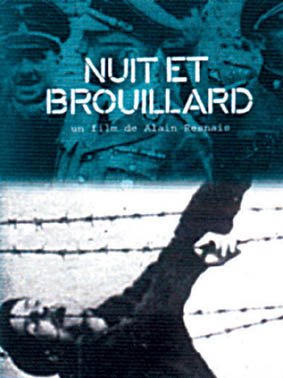
Night and Fog


I watched Alain Resnais' 1955 documentary, Night and Fog, on the horrors of holocaust and never ending tryst of humanity with such horrors. The documentary ends on a brilliantly pessimistic and cautionary note which raises this documentary up above the sheer footage of horror and inhumanity. Narrated and written by Jean Cayrol, who himself survived a Nazi camp, following are the closing lines.


Who among us will keep watch from this strange watch tower to warn the arrival of our new executioners ? Are their faces really different from our own ? Somewhere in our midst lucky Kapos will survive, reinstated officers and anonymous informers. There are those who refused to believe, or believe only for brief moments. With our sincere gaze we survey these ruins, as if the old monster lay crushed forever beneath the rubble. We pretend to take up hope again as the images recedes into the past, as if we were cured once and for all of all the scourge of the camps. We pretend it all happened only once at a given time and place. We turn blind eye to what surround us and a deaf ear to the humanity's never ending cry.

Wednesday, January 22, 2014

Tarkovsky's Rublev


I completed Andrei Tarkovsky's Andrei Rublev last night, my first of Tarkovsky which was long in the to-see list but I was deterred by its length and my shallow understanding, so saved it for a better day. It will take some time to think about the film and the passion of Andrei Rublev to sink in. What I really liked is the narrative that refrains from following the protagonist consistently. I was expecting that like any epic film about a legendary character, the film will be from Rublev's perspective and all the events and episodes would encircle him, but to my pleasant surprise this was not so. As the commentator Vlada Petric rightly points out - Tarkovsky doesn't want Andrei Rublev to be an epic film in the classic sense, lacking a central hero protagonist, it is the film's spatial and thematic breadth that function on an epic level evoking history by a synthesis of myths, legends and folklore.


According to Tarkovsky the task of a director is to pick out and join together the bits of sequential facts, focusing on what lies beneath them, while revealing what type of chain hold them together. Working on this principle the seemingly dis-jointed episodes of Andrei Rublev can be viewed as narrative bits, joined together by poetic associations of various images.

And here is what Tarkovsky has to say about his movie Andrie Rublev in the documentary Andrei Rublev: A Poet of the Cinema

The pressure Rublev is subject to is not an exception. An artist never works under ideal conditions, if they existed, his work wouldn't exist, for the artist doesn't live in a vacuum. Some sort of pressure must exist, the artist exists because the world is not perfect. Art will be useless if the world is perfect, as man wouldn't look for harmony but simply live in it. Art is born out of ill designed world. This is the issue in "Rublev": the search of harmonic relationship among men, between art and life, between time and history. Thats what my film is all about. Another important theme is man's experience, in this film my message is that it is impossible to pass on experience to others or learn from others. We must live our own experience, we cannot inherit it. People often say: Use your fathers experience! Too easy: each of us must get our own, But once we've got it, we no longer have time to use it. And the new generation rightly refused to listen to it. They want to live it but then they also die. This is the law of life, its real meaning. We cannot impose our experience on other people or force them to feel suggested emotions. Only through personal experiences we understand life. Rublev, the monk, lived a complex life. He studied with master Radonevsky, at the Holy Trinity but he lived in variance with his teaching. He got to see the world through his masters eye. Only at the end of his life, that he lived his own way.


I completed the film in two days and it was an experience to go through. Much should emerge after contemplation and analysis on the movie, but I was really taken over by The Bell episode and how beautifully it captures the spirit and travails of creation and getting your own experiences. For me it worked like a short film complete in itself but as a part of this epic cinema, it gather much profound meanings.

See Andrie Rublev's paintings here. It also contains his celebrated masterpiece The Old Testament Trinity, which is also shown in the film's final moments where it miraculously turns to color.

Wednesday, January 15, 2014

Fahrenheit 451


Apparently based on a futuristic novel by the same name, Fahrenheit 451, is about something else, and that is beyond love of books. The film sets its mood and tone right in this simple dialogue:

Boss: What does Montag do with his day off
Montag: Not very much sir, Mow the lawn.
Boss: And what if the law forbids that ?
Montag: Just watch it grow, Sir.


This is what a law-loving Boss, asks , our hero Montag, on the eve of his promotion, probably to gaze the morality and servility of the youngman. Montag, a fireman of the time to come , is very good at his duty of finding and burning books. He belongs to the times, ruled by a government that thinks books are root of all evil and sorrow and the act of reading them, sheer perversity and it gives our book-loving director an alibi to put the best of the books to flames and a certain point a book-loving woman also to the fire who refuses to be parted away from her books, a classic 'book as life' metaphor.

In a seemingly happy and definitely dormant society, people caress themselves in the subway trains, not because they are narcissistic but all the normal social contacts are dead, and to add to the seclusion, they are addicted to television to an alarming level. There are shows where you are made to think that you are part of them, there are shows to make the whole alien population a family and when I am saying all this it actually doesn't seem to be too distant, too futuristic, and with a little bit of extrapolation one can suggest that the whole set-up is already existing. In todays world we may not killing books in flesh, not we are certainly burning real books in spirit. The futuristic world that Truffaut paints is stark and cold in its boundaries, people inside their houses stick to their wall-tvs and become that virtual reality. When someone asks a lady how do the firemen find out which household has books, the lady looks up and shows the few houses that don't have the antennas, a metaphor of a social and mental divide.

The film has lot of Hitchcock effect, there is a dream sequence which reminds of Vertigo and the background music is also by Bernard Herrmann, who was a usual collaborator with Hitchcock. Also, in the spirit of the film, the titles are spoken and to make people really long to see the written text like the people of the genX where the film is set in, first printed words are shown only after 40 min of the movie where Montag reads the first paragraph of Dickens' David Copperfield -- David is born as the clock strikes 12 and so do our hero.

Fahrenheit 451 works as a cautionary tale in two ways, the first is about our quest for happiness and comfort and where it can lead us to and second its about the constant effort to check our liberties and how our passions will always find ways to break those checks and shackles, and more importantly the amalgam of the two, how we are forced to sacrifice our liberties for day dreams of comfort and happiness.

Friday, November 08, 2013

Kieslowski's Motives


When we talk about goodness of human spirit and the existence of people with such qualities and the need of this spirit in the society, we come across many works that romanticize the issue and miss the whole point. Also some other movies that claim to celebrate the human spirit and its unending power, tend to harp on it as a success solution or a portrayal of the moral-code that goodness is always rewarded, which not only trivialize the whole point on one hand but also belittle this spirit to something which is very narrow and close-ended. Most of the times, the concept of goodness is used to show that the good people are the ones who are the happiest and the end-winner of the banal zero-sum game that negates the basics of goodness and its desperate need in the society. Goodness of people living in society leads to the concept of fraternity with the people we share space and interact in our day-today lives. It is of-course a moral issue, and an issue that decides whether we can be called a good-social-animal or not.


In his last film and also the last part of his coveted color trilogy, Red, Kieslowski explores how we relate to others and given his penchant for co-incidences and fate playing on people, closely examines how these godly coincidences bring us together and once we are together, given our emotional differences, how our quotient of goodness and longing for emotional attachment works. Being the final film of a great auteur's career, Red gains more importance and relevance of being his final voice. Red, being the last film of the trilogy gives an open ended closure to the theme of the relationship between our inner and outer world and how these two criss-cross, putting us on the either side of a thin line. In my view, it is improper (if not futile) to talk about the films of the trilogy separately, it is more wholesome and rewarding to watch and analyze all three of them together, putting pieces of one to complete the puzzle of other thus giving an extra dimension to the former and vice versa.

White explores the concept of equality in terms of an emotion we all understand/relate to some extent, love, and asks us a question whether we are equal in love, or are we held captive by the passion that runs through our hearts. Blue, in its definitive somber tone, talks about the freedom from past and asks us whether being physically alone, leave us emotionally solitary too or it intensifies the effect of physical departure, are we free to govern any of these. Red the closing swan song, gives some answer to some of previously raised questions and in a way seems to convey that emotional bonding to people relieve us and even the driest of the human being have the desperate need for nobler emotions and bonding.

Relating the trilogy and the characters do give a great deal of insight on what Kieslowski ultimately wanted to say. Like music in Blue, shown as a uniting force for the geographically scattered beings, so is the pain, suffering, loss and happiness and all such emotions that make us create it. In a simple scene in Blue, Julie notices a street singer playing a tune exactly same as what her late husband wrote for his project on Unification of Europe and wonders the universality of such feeling and also gives a consent that her loss is not only to herself but universal and widespread, a sense of unification with others. Similarly in Red, the life events of the old-judge and the new-judge repeats not just to make the plot more interesting but to make it more intriguing that we all are being faced by similar situations, but we react to them differently, also almost angelic-virtue of Valentine in Red do suggest that child-like quality in all of us that inspires us to save a dying dog, feel guilty about listening to others private conversation, try hard to make-up with a ever-rough lover and suggest that this child within us is saved even in the final blow of the tempest.

Kieslowski's take of morality is often very personal , you can watch Decalogue to understand what exactly it means, here morality is not a dictum or set rules, lots of the things that seem immoral may be the most humane things to do. If we consider morality with respect to the color trilogy, we get some beautiful insights, In White, Karol, tricks his lover to love her till eternity, I understand that this episode should not be taken literally, but as a fantasy of love, as a subjective morality of a person who being humiliated by his lover, imprisons her, not because of jealousy or hatred, but out of love, and suffers in the same way that she is suffering. The tale in White has little moral significance to general morality but on contemplation it do brings points of equality in the labor of love. Red's take on morality comes from the mouth of the judge, who spies on his neighbors and didn't even justify the motives but he don't consider it bad or criminal, but later after interaction with Valentine he writes letters to his neighbors exposing himself. In way it suggests that our morality changes with interactions we have. Also in A Short Film about Love voyeurism is used as a way to connect people. Also in a very sublime scene, after listening to a conversation of a husband's deceit, Valentine decides to tell the wife but when she goes there she finds out her revelation will disturb the happiness and the apparent family bliss of the woman, thus she steps back. Judge's take on this was that the wife will know about it eventually but Valentine's subjective morality takes her back. Also this episode brings about more, the impact of the decision of a total stranger in one person's life.

One more point that Kieslowski makes in the trilogy in general, particularly in Blue, is about self-obsessiveness with our emotions and condition. Julie is fully immersed in her loss, also the Judge of Red is also left cold by the romantic betrayal, on the contrary Valentine, although also suffering because of her decaying love affair and her brother, yet she has not closed onto herself. Julie drenched with her past and memories of loss and her efforts to leave everything behind, do try to segregate her from the world, the place she dwells in and really need to be in. Julie, when called by her friend in the bar, breaks her bloodless chill, seeing that she could be the one to give solace to her. In White, in a wonderfully panoramic scene with the vast expanse of virgin white ice, Karol with his brother, goes on running and falling on the ice. His brother says "I feel like a kid again", Karol nods "Me too", this light-hearted comic scene do give me an impression of world's as a slippery ground where fall again and again and laugh about it. Also White in some way talks about the impossibility of revenge, at least in case of love or where we really connect to people, this seemingly hopeless thing gives lot of assurance about life in general, and love in particular.

In a recurring and vaguely connecting scene in the trilogy, an old man or woman tries to put a bottle in a recycling bin. In Blue, Julie, lost in her own world, don't even notice it. In White, Karol, getting a pretty bad deal from the world, although sees it, smiles wickedly, almost implying that somebody is even worse than he is. In Red, Valentine after seeing the old woman goes and helps her to put the bottle in the bin. In my view, the color trilogy, as a whole works on moral and empathetic platform with unknown possibilities of life thrown in and a person trying to steer through them. I do feel I have humanized the trilogy to a severe extent, but I also feel and undersatnd that Kieslowski wanted it to interpreted in terms of humble human proportions.

Wednesday, October 09, 2013

Naked Lunch


Before Naked Lunch, I have watched only one of Cronenberg's film, The Dead Zone. It was good but it didn't cross the limit of being great. Naked Lunch do it, quiet irrationally and quite consistently. This film is loosely adapted from William S. Burroughs's beat novel Naked Lunch but it is amalgamated with the tidbits of other stories by the same author and some of his real life details. One of the finest things about Naked Lunch is that it talks about the inseparability of inner reality from outer. I wasn't much aware of the style of Cronenberg before watching the movie. The Dead Zone was pretty straight forward. Naked Lunch exceeds here and its a mix of naivety and sophistication, this results in a insipid yet mouthwatering cocktail, which in turn gives a mix of dream, reality and fantasy, all of them at the same time. There are talking typewriters, big grownup bugs at the restaurant giving advises, human addiction to bug powder and what not, but it is not to sensationalize the screen, it is there to bring a feeling that it is not real, and at the same time a disturbing fear of what if we were there, a member of that blind orgy on a remote island of sand and dunes.

Naked Lunch is as absurd as a movie can get, there are some explanations to those absurdities too, but that's doesn't matter once the film engages you totally with its total lack of rationality. Naked Lunch revers irrationality in its crudest form. To say the least, Naked Lunch should be seen with an open mind.


As a customary, I will give a brief plot here, don't blame me, if it doesn't make any sense to your sensible minds. Bill Lee (played to pefection by Peter Weller), an exterminator, has a desire to write and regret his inability to do so to his friends. He discovers his wife, Joan Lee (Judy Davis) is a bug powder addict and soon he too joins her in the addiction. In a hallucinatory episode, he encounters an agent, a typewriter that transforms itself to a big bug and tells him that his wife is a spy with a plot to destroy her. The Bug instructs Bill to kill her so that she is not able to thwart his mission to a secret place called, Interzone. When Bill reaches his home, he invites Joan to play a "William Tell routine" and accidentally (or intentionally ?) kills her. Bill escapes to the paranoid landscape of Interzone, where he injects himself with different drugs from black meat, made of Brazilian centipede to another drug called mugwump jism and begins to experience altered realities of drugs and sexuality. Soon he starts to write but discovers that writing is consuming him. Near the end it looks like the conspiracy against him is exposed and he is back to reality but the process of creativity and destruction starts all over again.

Naked Lunch is not for those who want a film to be coherent or who may mistake high-art to plot holes or who may detest the graphic images or who believe in the bug-free purity of life or who are bent on taking things literally. Cronenberg paints his canvas with shades of gray with disconnected characters that go through a series of grotesque experience. The films also talks about the process of creation and seems to convey a vague message that a writer uses his art as a therapy. In a very interesting scene, the typewriter takes control of the writer and dictate the text to feed into it. Lee's bizarre addictions are used by Cronenberg to portray a journey, he is going through as a writer, as a husband and as a distressed being.


After Naked Lunch I watched The Fly and Crash by Cronenberg, both the movie do have the classic Cronenbergian style but they in a way or two lack the mad mastery of Naked Lunch, though Crash comes very close. It is obvious that this film cannot be taken literally, but we cannot so easily take it as a metaphor too. I would love to see a smoking monstrous bug sipping an orange colored drink and also wonder why a bug is used here and more importantly a combination of the two. The pleasure of watching it comes from it being both, like in Roman Polanski's psychological thriller The Tenant we are not given any clue what is real and what is happening in the mind of Trelkovsky and if the two very different, all this lead to a mystery that is in part unresolvable, in part highly contemplative with respect to human mind and its seemingly vague ways.

Naked Lunch score so high because its about addictions and their necessity to mankind. We move from one addiction to other to live, and in the meantime life throws its insolvable riddles to us, thus making it interesting and worth enjoying and analyzing. Naked Lunch reminds us of those realities and fantasies of creation and destruction, muse and desire, flesh and spirit, in its vital cinematic voice.

See the strange objects of David Cronenberg's desire here.

Tuesday, September 03, 2013

Winter Light


There are points of doubts in everybody's life. The double about our existence, its meaning, the reason for life to live, the doubts about the existence of other worldly beliefs and concepts like God, religion, society and love. In these times of desperation and mental unrest, we tend to seek answers, try to find some truths, lot of times these excavations result in no answers but more such apparently unanswerable questions. But the beauty of such uncertainties, desperations and anxieties is that we discover life by ourselves, one more step closer. We also have a choice of escaping from these questions and most of times we rest in some comfortable looking alibis that pave way for our well-fixed self-imposed ignorance. The most standard of all these questions is about faith. This question leads to many answers but the most common is God, the one supreme power, who is supposed to listen to us mortals and alleviate all worldly sufferings. Bergman explores the question about faith, its loss and god, his non-existence in Winter Light very directly, very incisively, very provocatively.

Winter Light is the middle film in Bergman's self-doubt generated faith trilogy that starts with god-mankind relationship exploration in Through a Glass Darkly and ends with a surreal psychodrama on suffocating isolation, The Silence. I have seen The Silence too, and liked its sensual surrealism but Winter light is what I call a movie that has all the things that entertain me intellectually, it is comically sad, deeply pensive and above all very philosophical.


Set in a chilly and dour winter Sunday afternoon in a remote Swedish countryside, Winter Light shows three hours of the life of Pastor, Tomas Ericsson, who is disillusioned and deeply conflicted. For another 80 minutes we are going to witness, a strong spiritual and emotional struggles of the few who attends the Sunday morning service where the attendance is plummeting day by day, just seven people appears but the ritual are done and shown in all their clinical details in the first 10-12 minutes of the movie. This congregation includes Tomas, Tomas’s Mistress and a schoolmarm -Martha, a young fisherman couple -Jonas and pregnant Karin, an old lady and church staff. After the prayer, Karin comes with her husband, wanting to discuss a something private with the flu-ridden Tomas. As Jonas is silent from some sort of shock, Karin explains that her husband has been extremely depressed by a recent news article, according to which, the Chinese, who are raised to hate, will soon possess the atomic bomb and intent in destroying the world. Pastor was unable to console and connect with Jonas and just says some clichés like 'We must trust in God' which rather generate some more anguish in Jonas. Karin suggests going home but Jonas returns for a private conversation shortly. Meanwhile Marta comes to meet Tomas with some food and longing for some love, but Tomas shows cold-blooded neglect. Later Tomas and Marta have more radical exchanges with long Bergmanesque close-ups, that talk about their corroded relationship and Tomas inability to express love or rather his indifference towards Marta. Later Tomas gets the news that Jonas has committed suicide. Shocked by this, Tomas rushes to the site of suicide to do the Clerical functions where Marta too joins her. Tomas and Marta again have an argument, which may be considered as cruelest verbal assault, I have ever seen on screen. The movie ends where Tomas performs a yet other meaningless service at the church with even less parishioners in attendance.


The literal translation of the Swedish title is 'The Communicants' as the film talks about loss of communication between man & god and man & man. Feeling emasculated, unwanted and lonely in this wide world is a common feeling that all characters share at certain point in the film. Lonely and neglected Marta is searching for some love in the heart of dry and doubtful Tomas. Conflicted Tomas felt almost impotent to answer what Jonas is worried about, and felt even incapable to satisfy his own growing doubts. Devout Karin, mother of two and pregnant with another one, is fearful of her husband’s condition and its outcome. In a sense it seems to be the internal drama in mind of Tomas, where Jonas appears to be his disturbed and shock-stricken self, Marta may be his dead wife with whom probably he was distant and cold when she was alive, Karin could be the common parishioners who seek solace from the everyday rituals and prayers which Tomas helps them in. All in all Winter Light works as a spirit of broken link between the man and something imaginary, when the link realizes that there is nothing as trustworthy at the other end as man would like to assume.


As true with any of the Bergman's film there are some scenes with neat cinematography by Sven Nykvist that stays with you. Here what stay are close ups of the two tormented souls, Marta and Jonas. There is an extremely beautiful one-shot monologue by Ingrid Thulin where Marta reads out a letter to Tomas. Ingrid Thulin offers a devastating portrait of a tortured girl, its undoubtedly the best of her performances in any of the Bergman movie I have seen. Gunner Björnstrand carves out a very believable and very human character out of Tomas. Max von Sydow displays a unique charismatic fear in his blank face that is unable to show any emotions and communicate. Gunnel Lindblom is simple as a mother and a caring wife. We cannot believe she is the same actress who played the sensual sister in The Silence, where Thulin plays the isolated intellectual sibling.


There are instances of deadpan black comedy through out the movie. Jonas commits suicide just after counseling from the pastor, the references that Tomas didn't want to be join church, the very reason why Jonas was afraid and the discussion on Christ’s suffering between Sexton and Tomas are the places where you feel what I can call a serious humor.

What make Winter Light one of the greatest films ever is the fact it works on the most human level, of course it almost slaps god for abandoning us all, but it pictures an examination on how badly everybody is looking for someone else to fall on, whether its Marta who wants the Pastor to show some love, or its Jonas who is afraid of massive Chinese attacks and thinks everything is soon coming to an end and there is no solace, no savior to it, or its Sexton who tells pastor about suffering and almost comically argues that he has suffered more than Jesus and beautifully contends that mental suffering hurts more than the physical one. The image of Jonas' God-fearing wife, speechless after hearing Jonas' death, thoroughly devastated is what mirrors Bergman's anguish for God and apprehension for the world.

Thursday, July 04, 2013

Ghatak's Meghe Dhaka Tara

I was reading about Ritwik Ghatak the previous week and became very interested in his themes and films. Fortunately one of my Bengali friend was visiting Calcutta so I thought of asking him to bring some of the Ghatak's movies for me. I was quite surprised that he had not heard of him, let alone some of the movies I asked for. One of those movies was Meghe Dhaka Tara (The Cloud-Capped Star), which is part of the trilogy that Ghatak made on the socio-political impacts of partition. The others in the trilogy are Komal Gandhar (The Gandhar Sublime or E-Flat) and Subarnarekha (The Golden Line). Quite expectedly he wasn't able to find any of the films. Its ironical that Ghatak's films are not easily available in Calcutta, let alone India.

This Saturday, I went to my DVD library for a routine check for any new movies, and to my surprise and happiness, they have just bought some of the Bengali classics and the list included Meghe Dhaka Tara. I was overly rejoiced. I saw Meghe Dhaka Tara late at night. Before watching the movie I knew that it is going to be an emotional drama and I might require a handkerchief or two. After reading about the themes of Ghatak's movies, it looked like his themes and style have something common with Ozu, Bresson and Sirk. His movies are sentimental, sad and melodramatic at times. Ghatak, who is said to have developed his own style of cinema, saw very little commercial success and little critical acclaim in his life time. He died of tuberculosis and alcoholism. Meghe Dhaka Tara was one of his few commercial successes and is considered one of his best works.


Meghe Dhaka Tara is the story of Neeta, the sole breadwinner in an expatriated family. There are many Hindi movies made on this concept, but they solely try to generate fake emotions from the pain of the victim till the viewer feel sorry for her. Although Meghe Dhaka Tara has a huge emotional impact, but it never employs any cheap trick to drain emotions. The film starts with the struggle of Neeta to fulfill the demands of all her siblings and help her lover, Sanat to continue his studies and her elder brother, Shankar to continue his riyaaz. As the film progresses, other problems cast their shadow on our heroine. The first of all is an indication by her mother that if she marries, who is going to look after them all. In hands of other filmmakers, this episode could have been a huge melodramatic scene, but Ghatak rations emotions. Although there are indirect references from her mother but Neeta herself decides not to marry for the benefit of her family. When she tells her decision to Sanat, he protests. In the meanwhile Neetu finds a job for her younger brother in a factory but as the salary starts coming he decides to move on. The second blow comes to her when Sanat gets married to her younger sister. In one of her previous conversations with Sanat, she had told him about her future hopes on him and her elder brother. In a final blow, her loving elder brother decides to leave the household as a protest of continuous bickering of her mother on him being a non-earning member of the family. In a very sublime scene, on the night of his leaving, he and Neeta sings a piece of Rabindra Sangeet which said 'Probably the storm is pennant of my ship, but I will never know'. Still working and giving money to the family, Neeta learns that she is suffering from a fatal ailment, she decides to stay in a separate room in the house making her own kitchen. Later Neeta's younger brother meets an accident and this incident lets her met Sanat again, where he proposes to starts their life again, but she refuses. The condition of Neeta keeps on deteriorating with no medication, till her elder brother comes and decides to put her in a sanitarium where she can at least die in some peace.

There are so many plot twists in Meghe Dhaka Tara, but it never looses the focus on the scrutiny of human nature, our fate to be a victim or a victimizer. All the pains Neeta took for her ungrateful family and friends were out of hope and love but later she realize that her biggest fault was not to protest of her exploitation and now she has to penance all her life for her being so stupid and so ordinary. Meghe Dhaka Tara has some pioneering and experimental sound effects. As Neeta and Sanat sit by the river bank, a train passes whose whistle completely sweeps away the conversation and there are whipping sounds when Neeta leaves Sanat for the last time. When Shankar and Neeta are singing the song, in the last stanza whipping sound starts and Neeta starts weeping inconsolably. Apart from it movie has four songs basically taken from folk music, and are used very beautifully and seamlessly in the narrative. There is ample use of close-ups in the movie, the most popular one is Neeta looks up in grief and suffocation while returning from Sanat's house. The name of the movie comes from one of the love letters Sanat has written to Neeta earlier in the movie which she was reading in the last reels of the movie when Shankar comes to meet her. In her very last wishes she expresses her desire to be alive.

For me their were two points where movie could have finished giving me full satisfaction. The first one come with the piece of Rabindra Sangeet that Neeta sings with her brother. This scene is particularly dear as Neeta finds some solace with her brother and his music but later when she thinks of her hopeless future she bursts out with whipping sounds in the background. The second scene is Neeta last meeting with Sanat at the same place where they used to meet in happy days and Neeta's refusal to comeback. This episode is particularly important with the fact that Neeta now understand that she has been exploited and it is she who has to pay for her exploitation. But the ending that Ghatak chose is equally heartbreaking, puts things in perspective, seems to suggest that life has taken a full circle and now new pathos will evolve.

Meghe Dhaka Tara is a film that manages to say things subtly than a typical melodrama usually does. This movie makes a strong statement under the plight of our heroine, that every one wants to live or to simply survive. In the reverberating penultimate scene Neeta cries out 'I want to live..' and the shot moves to the stills of empty mountains, hills and roads giving us a deep feeling that nobody is listening, and probably because they too want to 'just' live and are busy with it. This scene and the whole movie seems to speak volumes about our tiny existence in this big world. Meghe Dhaka Tara works as a sad ballad, brooding with emotions and melancholy.

Friday, March 15, 2013

Cries and Whispers

The coldness of death may be quite minimal to the coldness we show in our relationships. Death may be a welcome respite from this coldness or death may be a gate to supreme coldness of no relations. How does we look at death and how does we look at life devoid of any warmth. Are they same or the later is even worse. Why do you become cold in the relations which once were soulful and warm. Is it intentional or a result of other events of life. Is human affection so difficult to pursue. These are only some of the question we enconter as we walk through Cries and Whispers. Cries and Whispers has cries of death with whispers of longing of warmth.

Cries and Whispers is second Bergman's movie that I saw, first was Wild Strawberries. If you see these two movies, Bergman's affection to death and coldness in relationships seems too evident. May be it is amateurish to make such a statement, especially when you have seen only two movies of his, but the skill he shows in dealing with these emotions prompts you to believe that.

Cries and Whispers revolves round dying Agnes, her two sisters, Karin and Maria and their maid Anna. Although nothing much is told about Agnes past but it looks she is more warm then her sisters and long for some closeness with her sisters which she never receives. She only receives some real warmth and closeness from Anna. The relationship between Anna and Agnes could be seen as erotic but there are enough evidences that Anna is the motherly by heart and Agnes longs for that affection at her deathbed.

We see Karin, Maria and Anna in flashbacks. Karin is cold due to her ice-cold marriage. In the flashback, the scene at the dining table and bedroom paints a picture of Karin as an emotionally and sexually starved woman in anguish due to a dry relationship with her husband. This coldness and inability to connect with others becomes clear with her encounters with Maria where she stops any closeness and declares that she hate her. Although she later try to patch up with Maria but at that time Maria closes the doors. Karin with her seemingly hard exteriors is quite broken inside, she reminds of Erika of The Piano Teacher at times.

Maria is self obsessed beauty who witnesses the her wounded husband with fear but didn't reach to help him. Maria has an affair with Agnes' Doctor. In one of the most directly poetic scenes of the movie, Doctor narrates the minute but subtle changes that have come in Maria's face features since the time he met her first, depicting that Maria has gone manipulate and calculating with time and lost her innocence.

Anna seems the only kind character here, who is truly moved my Agnes' pain and try to console her by showing her all motherly love. The contrast between these characters is glaringly evident during the gruesome death sequence of Agnes where Karin and Maria couldn't conceal their coldness and not able to bridge the distance to come close to Agnes but Anna comes forward to help Agnes in her last moments. In one of the sequences, Anna cradles dead Agnes in her lap, that frame is almost picture perfect.

Cries and Whispers is superbly acted. The best of the them is Harriet Andersson as Agnes. Her painful death scenes is difficult to endure because of her compelling act. Kari Sylwan show all the traits of a mother in her portrayal of Anna. And there is cinematography which is nothing short of brilliant and soulful. Although Cries and Whispers is about darker sides of the life but you see different shades of red scattered all over. Bergman said that he used red because he think it is color of the soul. These stylistic flourishes makes a Cries and Whispers stunning to watch. Other mastery is shown in close-up department. I have heard that Bergman usually puts close ups of actresses, but he goes far enough to give you close ups of candles, clocks, flowers, letters in addition to the stunning close ups of stunning female cast.

Cries and Whispers works on a level that a few movies even aspire for. This masterpiece is usually considered a testimonial about death but to me it seemed to question more about life and its ways, bridges in relationships, warmth of closeness and coldness of mental distances.